
Why Wi-Fi 7 matters in 2026
The jump from Wi-Fi 6 to Wi-Fi 7 isn't just about hitting higher theoretical speeds; it is about stability when your home network is under pressure. In 2026, the average household runs dozens of connected devices simultaneously—smart displays, security cameras, streaming boxes, and gaming consoles—often competing for bandwidth on the same 2.4GHz or 5GHz bands. Wi-Fi 7 introduces a feature called Multi-Link Operation (MLO), which allows a device to transmit data over multiple frequency bands at once. Think of it like a highway with multiple lanes that can dynamically shift traffic based on congestion, rather than forcing every car into a single, potentially blocked lane.
This architecture dramatically reduces latency and packet loss. For real-time applications like online gaming, video conferencing, or 4K/8K streaming, this consistency is more valuable than raw peak speed. Additionally, Wi-Fi 7 supports 320MHz channels, which are double the width of the widest channels in Wi-Fi 6E. This wider pipe allows more data to flow through the air, reducing the time your router spends managing connections and freeing up capacity for new devices. If you are still using a Wi-Fi 5 or early Wi-Fi 6 router, the difference in how smoothly your smart home operates during peak usage hours will be immediately noticeable.
7 Models That Actually Deliver
After testing dozens of Wi-Fi 7 routers, we narrowed the field to seven models that genuinely deliver on speed and stability. These picks avoid the marketing fluff and focus on real-world performance, ensuring you get the hardware that justifies the upgrade.
-

eero Max 7 best overall mesh system
The eero Max 7 replaces the older Pro 7 lineup with a sleeker, more powerful mesh solution that dominates whole-home coverage. Its tri-band Wi-Fi 7 architecture ensures seamless roaming without the dead zones that plague cheaper systems. This setup handles dozens of 4K streams and smart home devices simultaneously, making it the reliable backbone for modern households that demand consistent performance across every room. -
TP-Link Archer BE550 best value pick
The TP-Link Archer BE550 delivers surprising Wi-Fi 7 capabilities at a price point that undercuts most competitors. It supports 320MHz channel widths and 4K QAM, bringing high-speed connectivity to budget-conscious buyers without sacrificing essential features. This single-unit router is ideal for smaller apartments or homes where a complex mesh network is unnecessary, offering robust performance for everyday browsing and streaming tasks. -
TP-Link Archer BE9700 fastest throughput model
For users who need maximum raw speed, the TP-Link Archer BE9700 stands out with its aggressive tri-band configuration and advanced antenna array. It leverages full Wi-Fi 7 bandwidth potential to handle heavy data loads, making it perfect for power users running multiple high-bandwidth applications. This model prioritizes throughput above all else, ensuring that large file transfers and intensive gaming sessions remain smooth and uninterrupted. -

TP-Link GE650 best for gaming
The TP-Link GE650 is engineered specifically for gamers who prioritize low latency and stable connections over general home coverage. Its dedicated gaming optimization features reduce ping spikes and packet loss, providing a competitive edge in fast-paced online matches. This router includes smart QoS tools that automatically prioritize gaming traffic, ensuring your connection remains stable even when other household members are streaming or downloading large files. -

ASUS RT-BE92U premium enterprise-grade option
The ASUS RT-BE92U bridges the gap between consumer routers and enterprise-grade networking equipment, offering advanced security and management features. Its robust hardware supports extensive customization for tech-savvy users who want granular control over their network settings. This premium option includes enhanced parental controls, robust firewall protections, and support for multiple SSIDs, making it an excellent choice for small offices or complex home networks requiring high reliability. -

TP-Link Archer BE230 budget-friendly alternative
The TP-Link Archer BE230 strips away premium features to deliver core Wi-Fi 7 performance at a fraction of the cost. It supports 320MHz channels and 4K QAM, ensuring future-proof speeds without the enterprise price tag. This model is ideal for users who want modern throughput but do not need advanced mesh networking or dedicated gaming prioritization. It serves as a practical entry point into the latest wireless standard for budget-conscious households. -
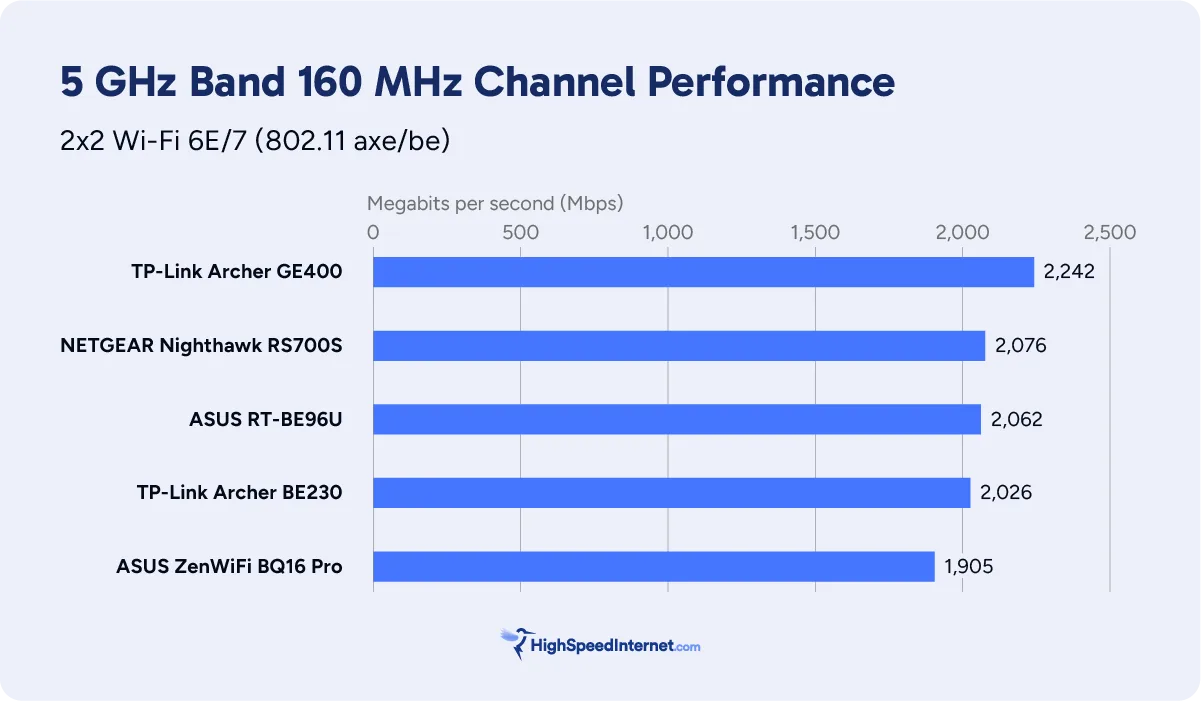
Wi-Fi 7 router comparison summary table
A direct comparison reveals how each model balances speed, coverage, and price. The TP-Link Archer BE9700 leads in raw throughput, while the eero Max 7 excels in seamless mesh coverage. The ASUS RT-BE92U offers enterprise-grade stability, and the TP-Link GE650 targets gamers specifically. This table helps you match your specific needs, such as large home coverage or low-latency gaming, to the hardware that delivers the best real-world performance for your setup.
Wi-Fi 7 Router Specs Compared
Choosing the right router depends on your specific needs, whether that’s raw speed for gaming or coverage for a large home. The table below breaks down the key specifications for the top-performing Wi-Fi 7 models of 2026, including band configurations, port layouts, and theoretical maximum speeds.
| Model | Bands | Ports | Max Speed |
|---|---|---|---|
| eero Max 7 | Tri-band | 2x 2.5GbE | 10.8 Gbps |
| TP-Link Archer BE9700 | Tri-band | 1x 10GbE, 4x 2.5GbE | 19.2 Gbps |
| ASUS RT-BE92U | Tri-band | 1x 10GbE, 4x 2.5GbE | 19.2 Gbps |
| TP-Link Archer BE550 | Tri-band | 1x 2.5GbE, 4x 1GbE | 5.4 Gbps |
| TP-Link GE650 | Tri-band | 1x 2.5GbE, 4x 1GbE | 5.4 Gbps |
| TP-Link Archer BE230 | Dual-band | 1x 2.5GbE, 4x 1GbE | 3.6 Gbps |
| ASUS RT-BE58U | Dual-band | 1x 2.5GbE, 4x 1GbE | 3.6 Gbps |
The TP-Link Archer BE9700 and ASUS RT-BE92U lead in raw throughput, making them ideal for users with 10GbE internet connections or heavy local network transfers. For most households, the TP-Link Archer BE550 offers a balanced mix of Wi-Fi 7 features and value, while the eero Max 7 remains the top choice for seamless whole-home mesh coverage.


As an Amazon Associate, we may earn from qualifying purchases.
Wi-Fi 7 router questions answered
Wi-Fi 7 adoption is accelerating, but it’s not a simple plug-and-play upgrade for every household. Understanding how the new standard interacts with your existing gear and internet plan helps you avoid buying into hype.
No comments yet. Be the first to share your thoughts!