
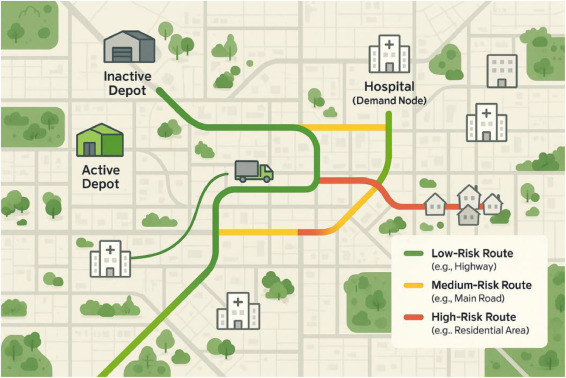
Ai routing optimization 2026 limits to account for
The 2026 routing crisis is no longer a future threat; it is a current operational bottleneck. As e-commerce volumes stabilize at record highs and labor shortages persist, traditional static routing methods fail to adapt to real-time disruptions. The constraint is no longer just distance—it is velocity under uncertainty. AI-driven dynamic path optimization has shifted from a competitive advantage to a baseline requirement for last-mile delivery success.
Direct Answer: What Works Now
AI route optimization software solves the 2026 constraint by processing live data streams—traffic, weather, delivery windows, and driver availability—to recalculate paths instantly. Unlike legacy systems that plan once at the start of the day, AI platforms adjust routes mid-shift. According to industry analysis, companies adopting these systems report a 15-25% reduction in transportation costs and 10-20% in fuel savings, with ROI typically realized within 3-6 months [[src-serp-2]]. This efficiency is critical for maintaining margins in a high-cost environment.
Comparison: Traditional vs. AI-Driven Routing
| Feature | Traditional Routing | AI-Driven Dynamic Routing |
|---|---|---|
| Update Frequency | Daily (static) | Real-time (dynamic) |
| Data Inputs | Distance, time windows | Traffic, weather, live ETAs, driver status |
| Disruption Response | Manual re-dispatch | Automated recalculation |
| Cost Impact | Higher fuel/labor costs | 15-25% lower transport costs |
| Scalability | Limited by planner capacity | Scales with algorithmic processing |
Tradeoffs by Use Case
Not every fleet needs the same level of AI sophistication. Small local couriers with predictable routes may find traditional tools sufficient, while high-volume e-commerce distributors require dynamic AI to handle unpredictable demand spikes. nuVizz, for instance, was noted in the 2026 Gartner Market Guide for Vehicle Routing and Scheduling for advancing AI-driven fleet routing and delivery execution, highlighting the industry’s shift toward integrated, adaptive systems [[src-serp-1]].
Decision: Choosing the Right Tool
When evaluating route optimization software, prioritize platforms that offer real-time adjustment capabilities and integrate with your existing TMS. Look for vendors with proven ROI metrics and support for complex constraints like multi-stop deliveries and driver hours-of-service regulations. Avoid tools that offer only static planning without live data integration—they will not solve the 2026 crisis.
Ai routing optimization 2026 choices that change the plan
Use this section to make the Solving the Routing Crisis decision easier to compare in real life, not just on paper. Start with the reader's actual constraint, then separate must-have requirements from details that are merely nice to have. A practical choice should survive normal use, maintenance, timing, and budget. If a recommendation only works in an ideal situation, call that out plainly and give the reader a fallback path.
| Factor | What to check | Why it matters |
|---|---|---|
| Fit | Match the option to the primary use case. | A good deal still fails if it does not fit the job. |
| Condition | Verify age, wear, and service history. | Hidden condition issues erase upfront savings. |
| Cost | Compare purchase price with likely upkeep. | The cheapest option is not always the lowest-cost option. |
How to choose the right dynamic routing solution
The 2026 routing crisis is not a technology shortage; it is a capacity constraint. Last-mile delivery volumes are outpacing static fleet capabilities, making traditional fixed-route planning obsolete. To solve this, you must select a system that adapts to real-time variables like traffic, weather, and customer availability. The decision framework below outlines the necessary steps to evaluate and implement an AI-driven dynamic path optimization system.
1. Assess your current routing baseline
Before adopting new technology, quantify the inefficiencies in your current workflow. Traditional methods often rely on historical data that does not account for real-time disruptions. Companies using AI route optimization report a 15-25% reduction in transportation costs and 10-20% fuel savings, with ROI typically achieved within 3-6 months. Establish a clear baseline of your current cost-per-delivery and on-time performance to measure the impact of the new system accurately.
2. Evaluate real-time adaptability requirements
Dynamic routing must process live data streams, not just static schedules. Your solution should integrate with traffic APIs, weather services, and driver apps to adjust routes on the fly. If a delivery window shifts or a road closes, the system must recalculate paths instantly. This adaptability is the core differentiator between legacy software and modern AI-driven platforms like those highlighted in the 2026 Gartner Market Guide for Vehicle Routing and Scheduling.
3. Compare vendor capabilities and integration
Not all AI route optimization software is created equal. Look for platforms that offer open APIs for seamless integration with your existing Transportation Management System (TMS) or Enterprise Resource Planning (ERP) tools. Vendors like nuVizz are advancing fleet routing by focusing on execution rather than just planning. Ensure the chosen solution supports multi-modal deliveries and can scale with your fleet size without requiring significant hardware upgrades.
4. Define success metrics and pilot testing
Avoid a full-scale rollout without a controlled pilot. Select a specific geographic zone or a subset of drivers to test the new system for 4-8 weeks. Track key performance indicators such as route adherence, fuel consumption, and driver feedback. This data will help you refine the algorithm’s parameters and address any user adoption issues before scaling across your entire operation.
5. Implement change management and training
Technology is only as effective as the people using it. Drivers and dispatchers need training to trust the AI’s recommendations, especially when the system deviates from established routes. Provide clear guidelines on how to override the system in exceptional cases and establish a feedback loop for continuous improvement. Transparency about how the AI makes decisions reduces resistance and increases compliance.
6. Monitor ROI and iterate
Post-implementation, regularly review the performance data against your baseline. Look for trends in cost savings, fuel efficiency, and customer satisfaction. Use these insights to fine-tune the algorithm’s weights for different variables, such as prioritizing speed over distance during peak hours. Continuous monitoring ensures the system remains aligned with your business goals and adapts to changing market conditions.
-
Calculate current cost-per-delivery and on-time rate
-
Verify real-time API integrations with traffic and weather services
-
Test vendor compatibility with your existing TMS/ERP
-
Run a 4-8 week pilot with a subset of drivers
-
Train dispatchers and drivers on new workflows
-
Review performance metrics and adjust algorithm weights
Spotting Weak AI Routing Claims
The 2026 routing crisis has spawned vendors making vague promises. Before signing contracts, verify that "AI-driven" means dynamic, real-time adaptation, not just static historical analysis. Many tools still rely on legacy algorithms that cannot handle sudden traffic shifts or same-day order changes, leaving fleets exposed to inefficiency.
Watch for specific performance metrics. Credible providers cite 15-25% reductions in transportation costs and 10-20% fuel savings, with ROI typically realized within 3-6 months. If a vendor cannot provide concrete data from recent deployments, treat their claims with skepticism. The Gartner Market Guide for Vehicle Routing and Scheduling highlights nuVizz and other leaders who demonstrate these tangible improvements through rigorous testing.
Avoid solutions that lack integration capabilities. A routing tool must connect seamlessly with your existing ERP and TMS systems. Standalone apps that require manual data entry introduce errors and delay decisions. Prioritize platforms that offer real-time visibility and automated adjustments, ensuring your fleet can respond to disruptions without manual intervention.
Ai routing optimization 2026: what to check next
Before committing to a new routing system, it helps to separate marketing hype from operational reality. The 2026 landscape is defined by AI-driven dynamic path optimization that adapts to real-time traffic, weather, and delivery windows. Below are direct answers to the most common questions about implementing these tools.
No comments yet. Be the first to share your thoughts!