
How AI routing differs from traditional methods
Traditional route planning relies on static algorithms that optimize for distance or time based on historical averages. These systems assume predictable traffic patterns and fixed delivery windows, creating rigid schedules that break down under real-world volatility. In 2026, last-mile delivery environments are too dynamic for static models. Traffic congestion, weather events, and real-time customer availability require continuous adjustment rather than pre-planned itineraries.
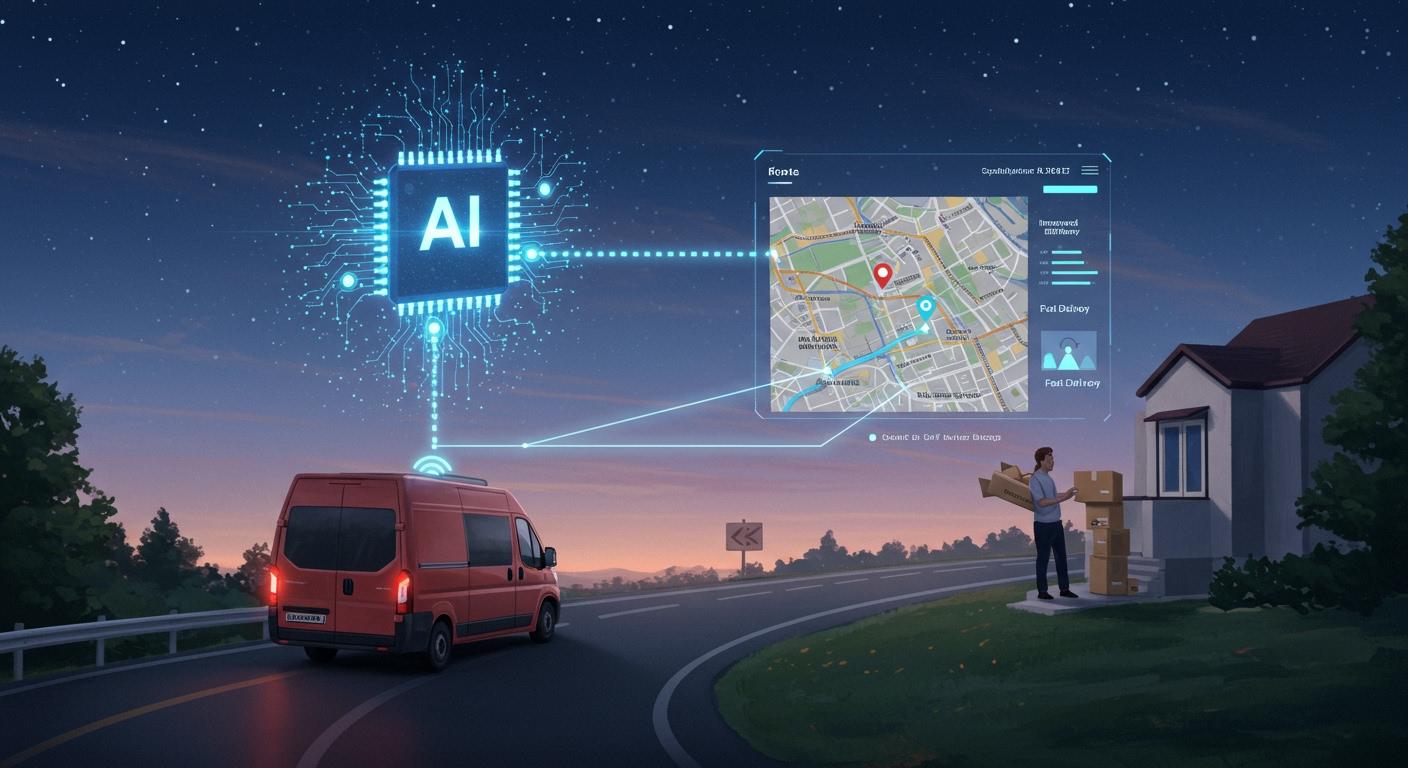
AI-driven route optimization treats logistics as a fluid problem. Instead of generating a single plan at the start of the day, AI systems ingest live data streams—including GPS traffic feeds, vehicle telemetry, and driver status—to recalculate routes on the fly. This dynamic approach allows dispatchers to reroute drivers instantly when unexpected delays occur, minimizing idle time and fuel waste. The shift from reactive to proactive routing is the defining technical difference between legacy TMS platforms and modern AI solutions.
The operational impact of this shift is measurable. According to 2026 research by FleetRabbit, companies implementing AI route optimization report a 15-25% reduction in transportation costs compared to traditional methods. This efficiency gain stems from the ability to process thousands of variables simultaneously, something impossible for human planners or static software.
While traditional methods focus on minimizing distance, AI routing balances multiple competing constraints: driver hours, vehicle capacity, delivery time windows, and real-time traffic. This multi-objective optimization ensures that the "best" route is not just the shortest, but the most reliable and cost-effective for the specific operational context of 2026.
Top AI route optimization software compared
In 2026, the market for AI route optimization software has shifted from experimental pilots to enterprise-scale execution. Logistics leaders now evaluate tools based on three operational pillars: scalability for high-volume fleets, integration depth with existing tech stacks, and the specific use cases each platform targets. The following comparison outlines how Onfleet, DispatchTrack, and NextBillion.ai address these priorities.
Onfleet
Onfleet positions itself as a unified delivery management platform optimized for speed and visibility. Its 2026 capabilities emphasize real-time tracking and automated customer notifications, making it a strong choice for last-mile operations that prioritize the end-customer experience. The platform’s strength lies in its ease of implementation and intuitive interface, which reduces the training overhead for dispatchers and drivers alike. It excels in scenarios requiring rapid deployment and high-frequency, smaller parcel deliveries.
DispatchTrack
DispatchTrack focuses on complex multi-stop routing and fleet management for larger, more heterogeneous fleets. Its 2026 features include advanced constraint handling for time windows, vehicle capacities, and driver regulations. This makes it particularly suitable for businesses with intricate logistics networks, such as food service distribution or regional freight. The software’s robust reporting and analytics provide deep insights into fleet efficiency, supporting data-driven decisions for long-term operational improvements.
NextBillion.ai
NextBillion.ai offers a developer-centric approach, providing AI-driven route optimization as a scalable API. This model is ideal for technology teams building custom logistics solutions or integrating routing capabilities directly into their own applications. By leveraging machine learning models that adapt to real-time traffic and historical data, NextBillion.ai provides flexibility and control over the optimization algorithm. It is best suited for companies with in-house engineering resources seeking to tailor routing logic to unique business rules.
Side-by-side comparison
The table below summarizes the key differentiators between these three platforms as of 2026. Use this data to align software capabilities with your specific operational needs.
| Feature | Onfleet | DispatchTrack | NextBillion.ai |
|---|---|---|---|
| Primary Use Case | Last-mile visibility | Complex fleet routing | Custom API integration |
| Implementation Speed | Fast | Moderate | Developer-dependent |
| Scalability | High volume, standard | High volume, complex | Highly scalable via API |
| Integration Depth | Standard E-commerce/ERP | Deep ERP/WMS integration | Full custom integration |
2026 Logistics Automation Trends
The landscape for AI route optimization software in 2026 has shifted from experimental pilots to execution at scale. Logistics teams are no longer asking if automation works, but how to integrate it into existing operational frameworks. The primary focus has moved beyond simple stop sequencing to encompass broader workflow autonomy and conversational interfaces.
Conversational Interface and Smart Sectorization
Modern route planning software now supports natural language queries, allowing dispatchers to adjust routes using plain text rather than complex software menus. This conversational AI capability reduces the time required to handle last-minute changes. Alongside this, smart sectorization algorithms dynamically group deliveries based on real-time traffic, driver availability, and vehicle capacity, ensuring that sectors remain balanced even as conditions change throughout the day.
Autonomous Agent Workflows
In 2026, AI agents are evolving from single-task tools into autonomous workflow orchestrators. These agents can route shipments, vet carrier compliance, and generate billing documentation without human intervention. This shift reduces administrative overhead and minimizes the risk of manual data entry errors. The technology enables a "set it and forget it" approach for standard delivery runs, freeing up logistics managers to focus on exception handling and strategic planning.
Selecting the right dynamic routing solution
Choosing the right AI route optimization software in 2026 requires aligning technical capabilities with your specific operational profile. The market has shifted from experimental pilots to scalable execution, meaning your selection must support immediate, measurable impact rather than theoretical benefits. Logistics managers must evaluate how well a platform handles your current fleet complexity and future growth.
Assess fleet size and scalability needs
Small to medium fleets often require plug-and-play solutions that minimize IT overhead. Larger enterprises need robust APIs that integrate with existing enterprise resource planning (ERP) and warehouse management systems. In 2026, scalability is defined by the ability to handle thousands of stops without degrading performance. Ensure the vendor can accommodate your peak season volume spikes without requiring manual intervention or workarounds.
Evaluate integration and technical resources
The most sophisticated routing engine is useless if it cannot communicate with your dispatchers’ devices and customer notification systems. Prioritize platforms with open APIs and pre-built connectors for common logistics stacks. If your team lacks dedicated engineering support, look for vendors offering comprehensive managed services. Verify that the software supports real-time data exchange, allowing drivers to receive updated instructions as traffic or delivery windows change.
Calculate ROI and implementation timeline
Companies using AI route optimization report 15-25% reduction in transportation costs and 10-20% fuel savings, with ROI typically achieved within 3-6 months. When evaluating vendors, request detailed case studies relevant to your industry. Ask about implementation timelines; some solutions can be deployed in days, while others may require months of configuration. Factor in training costs and ongoing support fees to determine the true total cost of ownership.
Finalize your decision
List must-have features versus nice-to-haves. Focus on constraints like driver app usability, proof-of-delivery requirements, and customer communication preferences.
Use your own historical delivery data to test routing efficiency. Compare AI-generated routes against your current manual processes to quantify potential time and fuel savings.

Ensure the SLA guarantees uptime and support response times. Verify data security compliance and understand the exit strategy if the partnership does not meet expectations.
-
API compatibility with existing ERP/TMS
-
Real-time traffic and weather data integration
-
Driver mobile app usability and offline mode
-
Scalability for peak season volume spikes
-
Transparent pricing model with no hidden fees
-
Defined ROI timeline and support SLAs
Common questions about AI route optimization
The landscape for AI route optimization in 2026 has shifted from experimental pilots to enterprise-scale execution. Organizations are no longer testing viability; they are deploying agentic workflows that allocate tasks to multiple AI agents to achieve defined operational goals (Trigyn, 2026). This shift is critical for logistics decision-makers evaluating software for last-mile delivery.
Can ChatGPT optimize routes?
Yes, but with limitations. Standard map integrations in ChatGPT often struggle with more than 10 stops due to processing constraints. However, specialized integrations like MyRouteOnline allow users to optimize large lists of addresses through ChatGPT, providing a single link for navigation. For professional last-mile operations, this is a tactical workaround rather than a comprehensive fleet management solution.
What are the trends for AI Automation in 2026?
AI agents and agentic workflows are fundamentally reshaping work. Instead of using AI as a reactive tool, employees in 2026 allocate tasks to multiple AI agents that collaborate to achieve defined goals. In logistics, this means route optimization software is increasingly autonomous, adjusting for traffic, weather, and delivery windows in real-time without constant human intervention.
What ROI can companies expect?
Companies using AI route optimization report a 15-25% reduction in transportation costs and 10-20% fuel savings (FleetRabbit, 2026). Most organizations see a return on investment within 3-6 months. The primary goals remain reducing travel time, lowering operational costs, and improving customer satisfaction through accurate delivery windows (Descartes, 2026).
No comments yet. Be the first to share your thoughts!