

In the pulsating world of DeFi, where Ethereum's Layer 2 solutions are scaling trades at unprecedented speeds, intent-based DEX aggregators emerge as a strategic bulwark against the pervasive threat of MEV extraction. With Ethereum hovering at $2,023.74, up $132.77 over the last 24 hours, traders are navigating volatile waters that demand not just speed, but ironclad protection. These platforms let users declare desired outcomes, like swapping USDC for ETH at the best rate, while a competitive cadre of solvers hunts down the optimal path across DEXs, RFQ protocols, and even L2 bridges, all without exposing orders to predatory front-running.
This shift from rigid transaction scripting to fluid intent expression marks a maturation in ethereum l2 dex aggregation. Traditional DEXs left users vulnerable to sandwich attacks and arbitrage exploitation, but solver networks flip the script: solvers bid to fulfill intents, capturing any MEV as their reward, which users sidestep entirely. It's a thoughtful redesign, prioritizing capital efficiency and execution quality over raw velocity.
The Mechanics of Solver Networks for MEV Protection
At the core of an intent based dex aggregator lies the solver network, a decentralized marketplace of algorithms vying to execute user intents. Picture this: you submit an intent to swap 1,000 USDC for as much ETH as possible on Arbitrum. Solvers scan liquidity pools on Uniswap, batch auctions via CoW Protocol, and RFQ venues, bundling trades into MEV-resistant bundles. The winning solver posts a bond, executes off-chain, and settles on-chain, pocketing the surplus as profit.
This architecture, amplified on Ethereum L2s like Base and Optimism, slashes gas costs and latency. Solvers leverage private mempools and batching to neutralize MEV protection solvers vulnerabilities inherent in public relays. CoW Protocol, for instance, dominates as the top intent-based aggregator, channeling over $10 billion monthly across chains including Arbitrum and Polygon. Their batch auctions ensure uniform execution prices, a strategic hedge against toxic flow.
Intent-based systems don't just protect; they reprogram incentives, turning MEV from a user tax into solver fuel.
UniswapX complements this by grafting intents onto AMMs, delivering gasless swaps that have racked up billions in volume. Meanwhile, 1inch Fusion's cross-chain prowess, sans bridges, underscores how solver network mev free swaps are bridging L2 silos seamlessly.
RFQ Protocols and the Economics Powering Optimal Execution
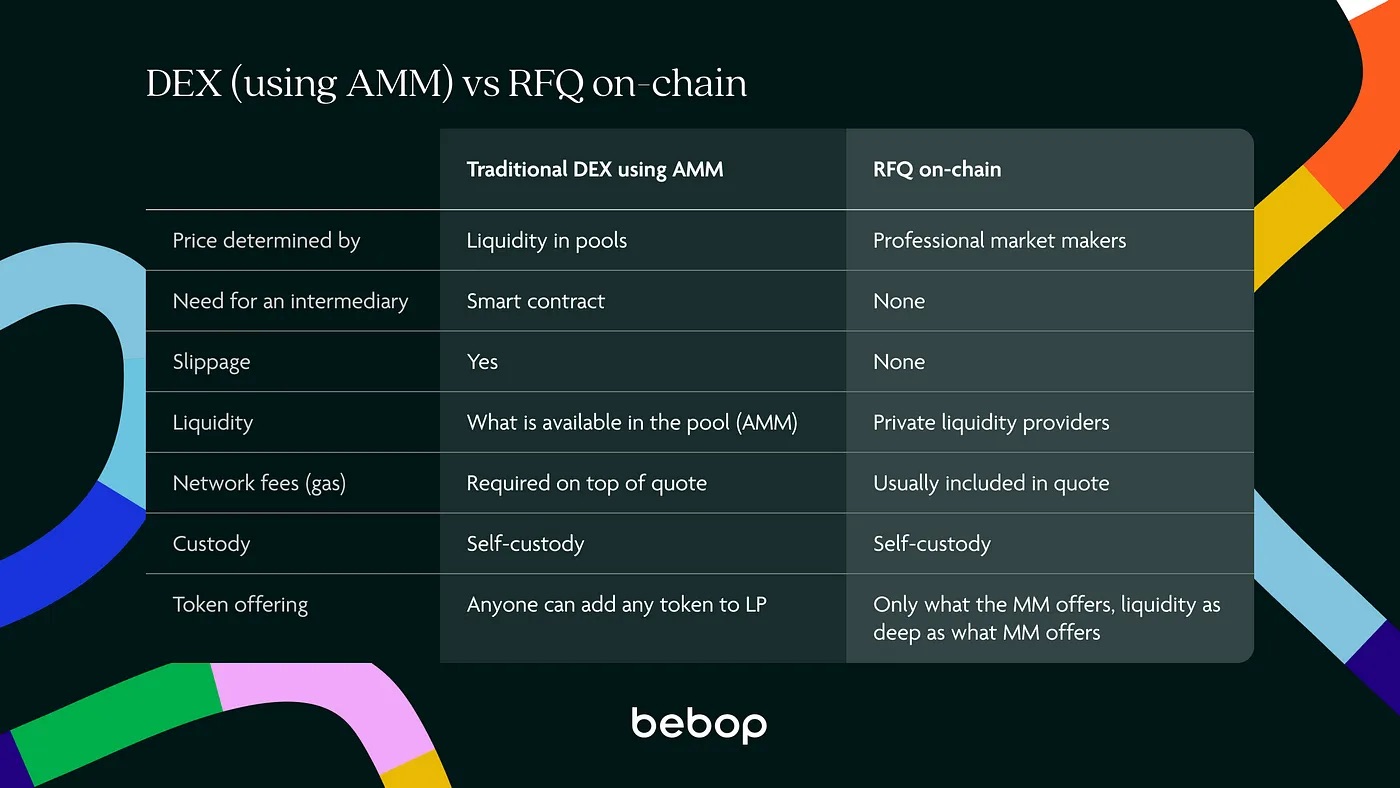
Enter RFQ protocols, the precision engine of these aggregators. Unlike open AMMs, RFQs solicit firm quotes from market makers and solvers, ensuring deep liquidity without slippage. In a rfq protocol dex setup, intents trigger competitive quotes, with solvers optimizing across L2s for the tightest spreads. ERC-7683, the emerging standard, promises interoperability, allowing intents to hop chains fluidly.
Strategically, this fosters a vibrant solver economy. High-performance nodes, incentivized by bid-ask spreads and MEV recapture, invest in superior routing. Platforms like SolverRouter exemplify this, connecting intents to elite solvers for institutional-grade fills. Yet, economics matter: solvers must balance bonding costs against fulfillment rewards, cultivating a meritocracy where only the sharpest survive.
Recent launches like SODAX, enabling 20-30 second cross-chain swaps across 12 chains, highlight the pace. Fees undercut competitors by over 1%, a nod to solver-driven efficiencies. On L2s, where sequencer centralization looms, diversified solvers mitigate risks, from collusion to censorship.
Ethereum (ETH) Price Prediction 2027-2032
Factoring L2 growth, intent-based DEX aggregators, and MEV protection adoption from 2026 baseline of ~$2,500 average
| Year | Minimum Price | Average Price | Maximum Price | YoY % Change (Avg from Prev) |
|---|---|---|---|---|
| 2027 | $2,200 | $3,800 | +52% | |
| 2028 | $3,000 | $5,500 | +45% | |
| 2029 | $4,000 | $7,500 | +36% | |
| 2030 | $5,200 | $10,000 | +33% | |
| 2031 | $6,500 | $13,500 | +35% | |
| 2032 | $8,000 | $18,000 | +33% |
Price Prediction Summary
Ethereum (ETH) is forecasted to experience robust growth from 2027 to 2032, driven by Ethereum L2 expansion and intent-based DEX aggregators like CoW Protocol, UniswapX, and 1inch Fusion, which enhance trading efficiency, security, and MEV protection. Average prices are projected to rise progressively from $3,800 in 2027 to $18,000 by 2032 in a base case, with bullish maxima reaching $30,000 amid DeFi TVL surges and market cycles, while minima account for potential bearish regulatory or competitive pressures.
Key Factors Affecting Ethereum Price
- L2 scaling solutions boosting throughput and reducing fees, increasing ETH utility
- Intent-based protocols (CoW, UniswapX, SODAX) driving DeFi adoption with MEV-free swaps and capital efficiency
- Solver network advancements (e.g., ERC-7683) enabling seamless cross-chain intents
- Market cycles with post-2026 bull potential tied to broader crypto recovery
- Regulatory developments favoring DeFi innovation in key markets
- Risks from solver centralization, competition, and macroeconomic factors
- Historical technical patterns showing ETH's resilience and growth correlation with ecosystem TVL
Disclaimer: Cryptocurrency price predictions are speculative and based on current market analysis. Actual prices may vary significantly due to market volatility, regulatory changes, and other factors. Always do your own research before making investment decisions.
Navigating Challenges in the Intent Era
Despite the promise, building robust mev protection solvers ecosystems demands vigilance. Solver centralization, while efficient, invites trust assumptions; a handful of dominant players could collude on quotes. Diverse participation, via open-source tooling and low barriers, is paramount. L2 sequencers add another layer, their ordering power potentially reintroducing MEV vectors unless shared models prevail.
From my vantage, with 18 years dissecting markets, the antidote lies in protocol fundamentals: RFQ depth, solver count, and audit rigor. CoW's market share leadership stems from such strengths, processing volumes that dwarf peers. As ETH stabilizes at $2,023.74 after dipping to $1,866.99, intent aggregators position traders for the next leg up, safeguarding yields in DeFi's expansion.
Evaluating these elements strategically reveals why platforms like SolverRouter stand out in the crowded field of ethereum l2 dex aggregation. By linking user intents to a broad network of solvers via RFQ protocols, it ensures execution that rivals centralized exchanges, all while embedding MEV safeguards. Traders benefit from minimized slippage and maximized yields, crucial as Ethereum's price holds steady at $2,023.74 amid a 24-hour high of $2,113.04.
Comparing Leading Intent-Based Aggregators
Divergent approaches define the landscape. CoW Protocol excels in batch auctions, fostering uniform pricing across L2s like Base and Arbitrum. UniswapX prioritizes AMM integration for familiar liquidity, while 1inch Fusion disrupts with bridge-less cross-chain intents. SODAX, the newcomer, slashes execution times to 20-30 seconds, undercutting fees by over 1% through solver competition.
Comparison of Top Intent-Based DEX Aggregators
| Protocol | Monthly Volume | Supported Chains | MEV Protection Method | Avg Execution Time |
|---|---|---|---|---|
| CoW Protocol | > $10 Billion | $Ethereum, Gnosis Chain, Arbitrum, Polygon, Avalanche, Base | Batch auctions via solver network | N/A |
| UniswapX | Billions | Various chains including Ethereum L2s | Intent-based routing with solver efficiency | N/A |
| 1inch Fusion | N/A | Extensive cross-chain support | Intent-based architecture (Fusion+ no bridges) | N/A |
| SODAX | N/A | 12 blockchains | Intent-based cross-chain swaps | 20-30 seconds |
These protocols collectively process tens of billions monthly, a testament to user trust in solver network mev free swaps. Yet, interoperability lags; ERC-7683 aims to unify them, enabling seamless intent fulfillment across ecosystems.
Strategic Selection for Optimal Trading
Choosing the right intent based dex aggregator hinges on aligning protocol strengths with your strategy. High-frequency traders favor low-latency solvers like SODAX, while long-term holders prioritize deep RFQ liquidity from CoW. Institutional players, myself included after years of macro analysis, seek diversified networks to hedge centralization risks.
Key MEV-Protected DEX Factors
- Solver Diversity: Broad solver networks, like those in CoW Protocol, prevent collusion and ensure competitive, censorship-resistant intent fulfillment.
- RFQ Depth: Deep request-for-quote liquidity from competing solvers improves pricing and execution for complex swaps on L2s.
- L2 Support: Coverage across Arbitrum, Polygon, Base, and Avalanche enables efficient, low-gas trading without bridge risks.

- Volume Processed: Protocols handling billions monthly, such as CoW's $10B+, prove scalability and reliable MEV shielding.

- Fee Structure: Gasless, transparent fees in UniswapX and 1inch Fusion optimize costs while protecting against front-running.
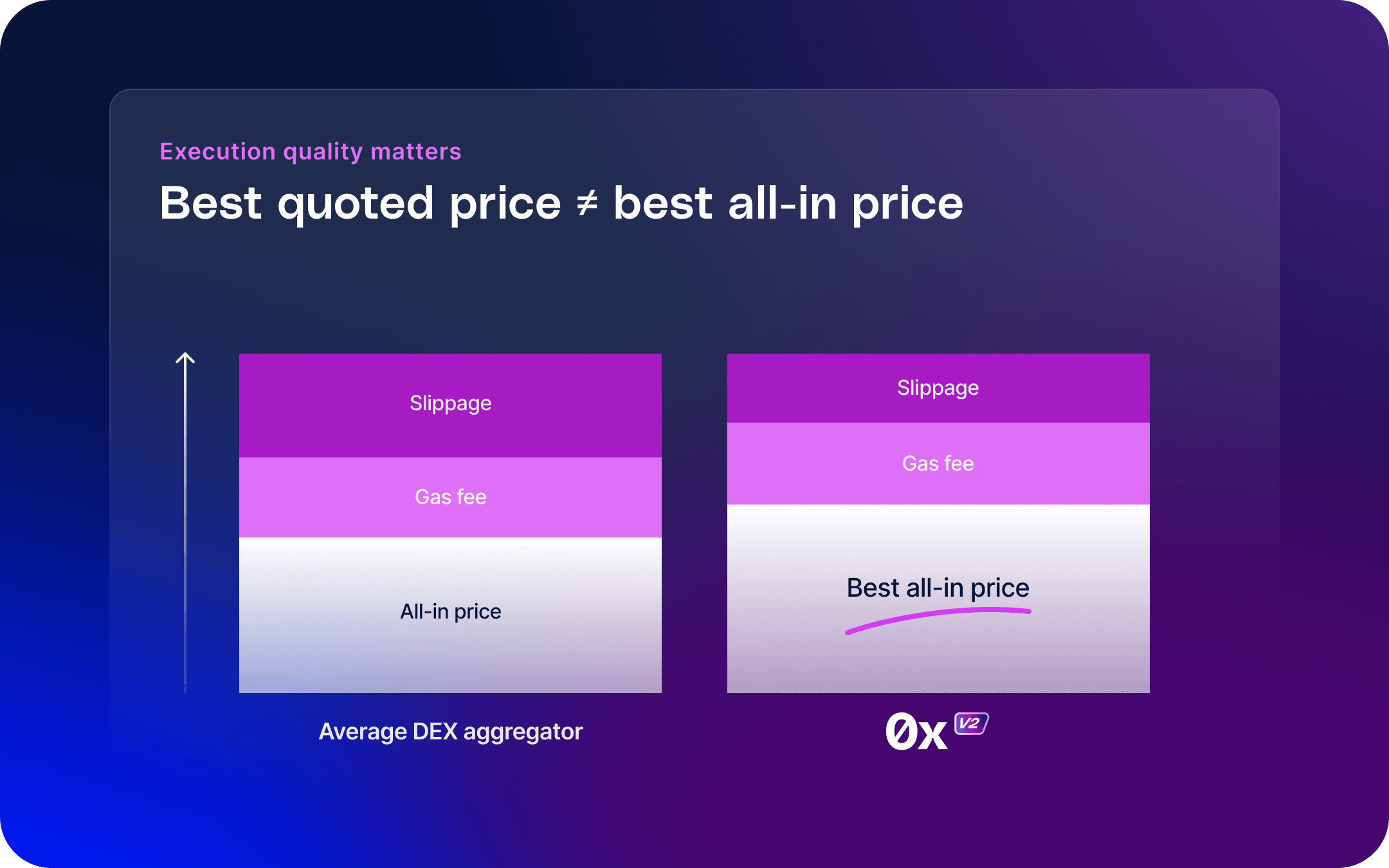
SolverRouter embodies this balance, routing intents to top performers for execution that captures alpha without exposure. Its RFQ-centric model draws from market maker depth, ensuring fills even in illiquid pairs on L2s.
FAQs on Intent-Based Trading
Looking ahead, as DeFi matures on Ethereum L2s, intent architectures will dominate. With ETH's resilience, evidenced by its rebound from $1,866.99 to $2,023.74, these aggregators fortify positions against volatility. Solver economics evolve too: bonding mechanisms and reputation scores refine competition, weeding out underperformers.
From a CFA lens, fundamentals like solver count and historical fill rates predict longevity. Platforms ignoring these court obsolescence. Instead, those like SolverRouter, with robust MEV protections and RFQ protocols, chart the path forward. Traders who adopt now harness DeFi's efficiencies, turning market noise into strategic edge. The ecosystem's vibrancy, processing billions amid ETH's steady climb, signals a bright trajectory secured by intent-driven innovation.



No comments yet. Be the first to share your thoughts!