

Why Wi-Fi 7 matters for 2026 homes
Wi-Fi 7 isn't just a faster version of Wi-Fi 6; it changes how your router handles the sheer volume of devices in a modern smart home. The leap from Wi-Fi 6E is defined by two major technical shifts: support for 320MHz channels and a feature called Multi-Link Operation (MLO). These changes allow the router to use multiple frequency bands simultaneously, reducing congestion and cutting latency significantly.
For a home packed with smart speakers, security cameras, and 4K TVs, this capacity matters more than raw speed alone. Wi-Fi 6 routers often struggle when many devices request data at once, leading to buffering or dropped connections. Wi-Fi 7’s improved efficiency ensures that each device gets the bandwidth it needs without waiting in line.
The result is a network that feels invisible. You won’t notice the dozens of devices connected because the router manages the traffic intelligently. If you are planning to upgrade your home network in 2026, this stability is the primary reason to choose Wi-Fi 7 over older standards.
5 Top Picks for Smart Homes
These five Wi-Fi 7 routers—specifically the TP-Link Archer BE800, Netgear Nighthawk RS700S, ASUS ROG Rapture GT-BE98, Eero Pro 6E Max, and Linksys Hydra Pro 6E—deliver the low-latency throughput required for dense smart home environments. Each model is selected for its ability to handle simultaneous 4K streaming, gaming, and IoT traffic without congestion.
1. ASUS ROG Rapture GT-BE19000
The ASUS ROG Rapture GT-BE19000 is a beast built for enthusiasts who demand absolute control. Its aggressive design houses powerful hardware capable of handling massive bandwidth without breaking a sweat. Gamers will appreciate the dedicated gaming ports and advanced traffic shaping features that prioritize low latency. This router ensures your competitive edge remains sharp during peak usage hours.
2. TP-Link Archer BE800
TP-Link’s Archer BE800 offers a compelling balance of performance and value for modern smart homes. It delivers robust Wi-Fi 7 speeds across three bands, ensuring smooth streaming and gaming for multiple devices. The sleek, compact design fits easily into any living space without dominating the room. Setup is straightforward, making it an excellent choice for users seeking reliability without complexity.

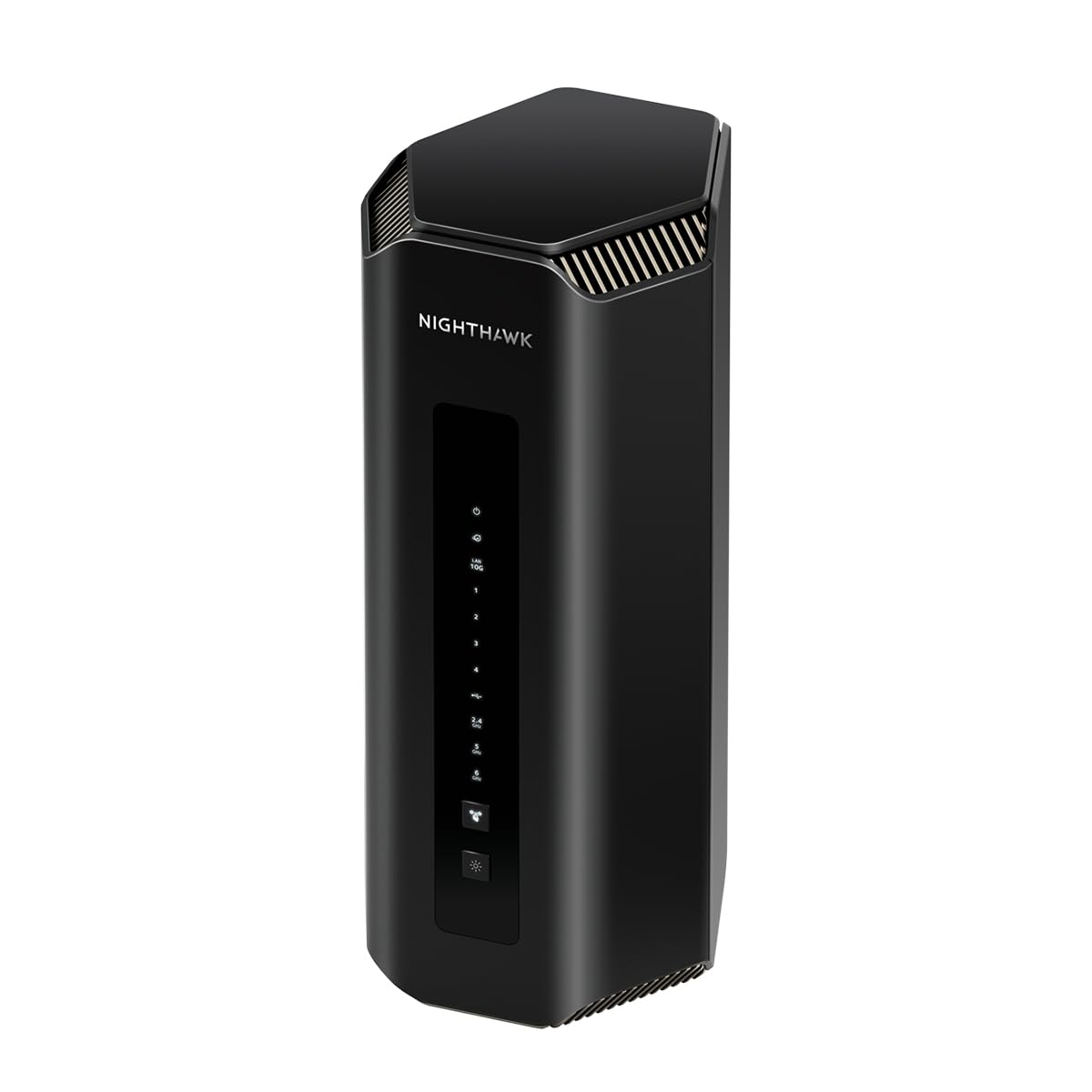
3. Netgear Nighthawk RS700S
The Netgear Nighthawk RS700S stands out as a powerful standalone router for those who prefer traditional setups over mesh systems. It provides exceptional range and stability, making it ideal for larger homes with thick walls. The robust build quality and advanced security features protect your network from potential threats. It handles heavy workloads effortlessly, ensuring consistent performance for all connected devices.
4. Linksys Hydra Pro 6E
Linksys Hydra Pro 6E combines classic Hydra design with modern Wi-Fi 6E capabilities for seamless connectivity. Its eight antennas ensure comprehensive coverage throughout your home, eliminating dead zones effectively. The intuitive app makes managing network settings simple, allowing you to prioritize devices or set up guest networks quickly. It’s a reliable choice for families needing consistent performance across multiple devices.

5. Eero Pro 6E Max
The Eero Pro 6E Max redefines simplicity with its mesh-based approach to whole-home Wi-Fi. Designed for easy integration, it provides consistent coverage and automatic updates to keep your network secure. The sleek, minimalistic design blends seamlessly into any decor while delivering impressive speeds. It’s perfect for users who want a set-it-and-forget-it solution that just works reliably.

How to choose the right Wi-Fi 7 router
Selecting the best Wi-Fi 7 router depends on balancing three factors: your home’s square footage, the number of connected devices, and your budget. Wi-Fi 7 hardware is expensive, so you should only pay for the speed tiers you actually need.
Start by matching the router’s coverage to your space. A single-beam router like the TP-Link Archer BE550 works well for apartments or small homes under 1,500 square feet. For larger homes or those with thick walls, look for mesh systems that support Wi-Fi 7 backbones to eliminate dead zones in every room.
Next, consider your device count. If you have more than 50 smart devices or 8K streaming setups, prioritize routers with high-density support and dedicated bands. The ASUS RT-BE96U excels here, offering the raw throughput needed for heavy multi-device households without choking on background traffic.
Finally, align the price with your actual internet plan. A Wi-Fi 7 router will not make your internet faster than your ISP provides. If you have a 1 Gbps plan, a mid-range Wi-Fi 7 router is sufficient. Only upgrade to high-end models if you need local network speeds for heavy file transfers or future-proofing for multi-gigabit connections.
Quick Comparison of Top Picks
| Router Model | Best For | Max Speed | Key Feature |
|---|---|---|---|
| TP-Link Archer BE550 | Most People | 5.4 Gbps | Best Value |
| ASUS RT-BE96U | Heavy Users | 19.2 Gbps | High Density |
| Netgear Nighthawk RS700S | Large Homes | 11.4 Gbps | Mesh Ready |
| Linksys Hydra Pro 6 | Budget Wi-Fi 6E | 3.6 Gbps | Affordable |
| Eero Pro 6E | Simplicity | 3.6 Gbps | Easy Setup |
Amazon Product Recommendations


As an Amazon Associate, we may earn from qualifying purchases.
Buying Checklist
-
Measure your home’s square footage to determine coverage needs.
-
Count active devices to decide on band separation and density.
-
Check your ISP plan speed to avoid overpaying for unused bandwidth.
-
Verify your existing devices support Wi-Fi 7 to realize the full benefits.
Is a Wi-Fi 7 router worth buying now?
Wi-Fi 7 hit the market in 2023, but the experience is still inconsistent. While some models deliver genuine next-gen performance, many do not offer an experience meaningfully better than good Wi-Fi 6 hardware [src-serp-1]. Upgrading only makes sense if you have compatible devices and need the extra speed.
If your current network handles 4K streaming and gaming without issues, you can safely wait. However, if you are building a new smart home or need to support multiple 8K streams, the new standard provides necessary headroom.
No comments yet. Be the first to share your thoughts!