
Why AI routing matters for 2026 gaming
Static routing protocols are no longer sufficient for competitive gaming. Traditional Quality of Service (QoS) rules operate on rigid, pre-set priorities that cannot react to the chaotic, real-time fluctuations of modern internet traffic. When a video call, a cloud backup, and a game server all compete for bandwidth, static routers often fail to prioritize the lowest latency path, resulting in jitter and packet loss.
AI-driven dynamic optimization changes this by treating your network like a living system. Instead of following a fixed map, AI routers like those featuring the Solver Router continuously analyze traffic patterns and network conditions. They predict congestion before it happens and reroute data packets through the least congested paths in milliseconds. This predictive capability is essential for maintaining the sub-20ms latency required for high-level esports.
This shift from reactive to proactive routing is becoming the standard for 2026 gaming hardware. By leveraging edge computing and machine learning, these routers make micro-decisions about data flow that human administrators cannot manually configure. The result is a more stable connection that adapts to your specific home environment, ensuring that your gaming traffic always takes the fastest route.
How Solver Router Handles Intent and Jitter
Solver Router technology moves beyond simple packet forwarding by treating network traffic as a dynamic problem to be solved in real time. Instead of relying on static routing tables, the router analyzes intent-based traffic flows—identifying whether a packet belongs to a high-priority gaming session or a background update—and assigns it to the optimal path instantly. This intent-first approach ensures that low-latency requirements are met before congestion occurs, rather than reacting to it after latency spikes.
A critical component of this system is MEV (Maximal Extractable Value) protection, which prevents malicious actors from manipulating network traffic for financial gain or latency exploitation. In gaming, MEV attacks can manifest as artificial packet delays or reordering designed to disrupt competitive play. Solver Router identifies these anomalies at the edge, filtering out suspicious traffic patterns that do not align with legitimate user intent. By securing the edge, the router maintains a clean pipeline for game data, reducing jitter and preventing the "rubber-banding" effect that ruins immersion.
The combination of intent recognition and edge protection creates a stable environment for competitive gaming. While standard AI routers might optimize for bandwidth, Solver Router optimizes for consistency. This distinction is vital for gamers who need predictable ping times rather than just high download speeds.
Solver Router vs. Standard AI Routers
The difference between a Solver Router and a standard AI-optimized router becomes clear when measuring performance under stress. Standard routers often prioritize throughput, which can lead to packet loss during peak hours. Solver routers prioritize path stability and intent adherence, ensuring that gaming packets are never deprioritized.
| Feature | Solver Router | Standard AI Router |
|---|---|---|
| Latency Handling | Proactive path switching based on intent | Reactive adjustment after spike |
| MEV Protection | Edge-level anomaly detection | Basic firewall filtering |
| Jitter Reduction | Consistent packet ordering | Variable buffering |
| Decision Speed | Real-time edge processing | Cloud-based or delayed analysis |
Community Insights on Router Stability
Gamers consistently report that the difference between a good router and a Solver Router is felt during high-load scenarios. Community discussions highlight that while many routers claim "AI optimization," only those with true intent-based routing can maintain stable connections during large data transfers or server updates.
Top AI-Optimized Routers for 2026
The 2026 router landscape shifts from simple connectivity to active network management. Modern gaming routers now embed edge computing capabilities that process data locally, reducing the distance packets travel before optimization occurs. This shift directly impacts ping stability, turning variable connection quality into a consistent baseline for competitive play.
AI network optimization 2026 models analyze traffic patterns in real-time. Instead of waiting for congestion to slow your game, these routers preemptively route high-priority gaming packets through the least congested paths. The result is lower latency during peak hours and fewer micro-stutters during intense multiplayer sessions.
Key Hardware Features to Look For
When selecting a router for 2026, prioritize hardware that supports continuous AI processing. Look for multi-core processors capable of handling machine learning inference alongside high-speed Wi-Fi 7 or advanced Wi-Fi 6E radios. Edge computing modules are increasingly standard, allowing the router to make split-second decisions without cloud dependency.
Another critical feature is adaptive QoS (Quality of Service). Traditional QoS rules are static; AI-driven QoS learns your gaming habits and device hierarchy automatically. It identifies your console or PC by its traffic signature and ensures it gets priority bandwidth, even when other household devices are streaming 4K video or downloading large files.
Recommended AI Routers for Gaming
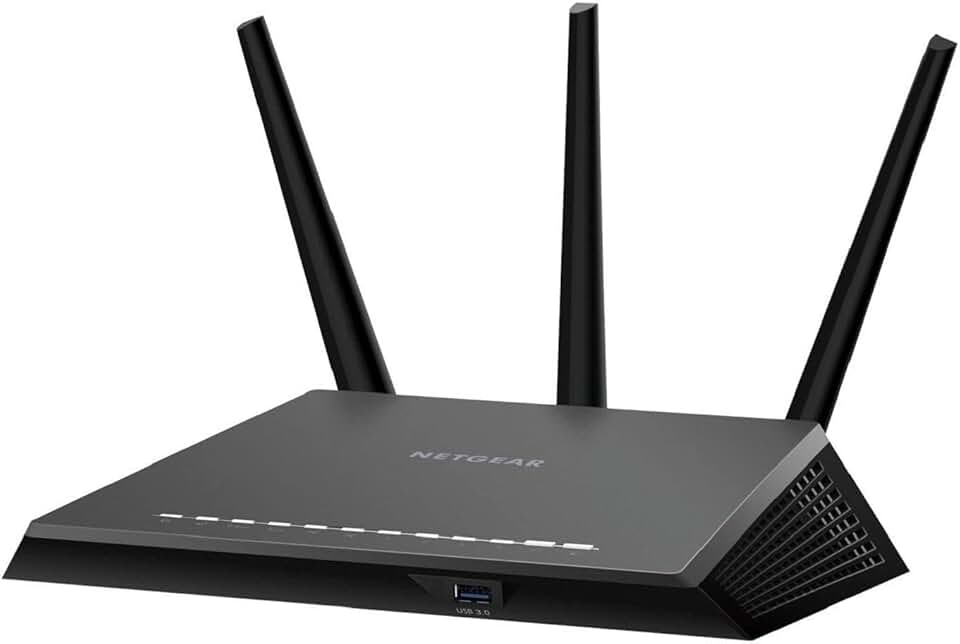
The following routers represent the current standard for AI-optimized networking. They combine hardware acceleration with software that continuously learns and adapts to your specific network environment.


As an Amazon Associate, we may earn from qualifying purchases.
How AI Changes Your Setup
Integrating an AI-optimized router often requires minimal configuration. Most models automatically detect gaming devices and apply optimization profiles upon connection. However, for best results, verify that the "AI Game Acceleration" or similar feature is enabled in the router's firmware settings.
These systems also provide valuable analytics. You can view historical latency data and see how the AI has adjusted your network over time. This transparency helps you understand if your ISP is throttling traffic or if local interference is affecting performance, allowing for more informed troubleshooting.
Setting up your AI gaming network
Configuring an AI router for low-latency gaming requires shifting from manual traffic shaping to automated edge optimization. Modern devices like the Solver Router use machine learning to predict packet loss and reroute data before it impacts your frame rate. This setup process ensures your network infrastructure actively defends against jitter during peak hours.

Access your router’s admin dashboard and locate the AI or Machine Learning settings. Toggle on edge computing features to allow the router to process gaming packets locally. This reduces the round-trip time by keeping critical data closer to your console or PC rather than sending it through distant cloud servers.

Identify your gaming device’s MAC address in the connected devices list. Assign it to the highest priority tier within the Solver Router interface. This ensures that even when other household members are streaming 4K video, your gaming traffic receives immediate bandwidth allocation and minimal latency.

Use the router’s built-in diagnostic tools to run a baseline latency test against your game server. Compare the results with and without the AI optimization features active. Adjust the sensitivity settings if you notice packet drops during high-load scenarios, ensuring the AI algorithm adapts to your specific network environment.
As an Amazon Associate, we may earn from qualifying purchases.
Common AI router questions for 2026
AI networking is shifting from experimental features to standard hardware capabilities. As edge computing becomes more common in consumer routers, latency reduction is no longer just about raw speed but about intelligent traffic routing.
Does AI actually slow down gaming performance?
No. AI processing for network optimization happens locally on the router’s dedicated chip, not on your console or PC. Features like the Solver Router analyze packet paths in milliseconds, prioritizing gaming traffic without adding lag. You get lower ping, not higher CPU usage on your gaming rig.
Which AI router is best for network configuration?
Manual configuration is becoming obsolete. Modern AI routers use machine learning to map your home’s network topology automatically. They detect interference from neighbors and adjust channels dynamically. Look for routers that advertise "self-healing" networks or automatic QoS (Quality of Service) tuning based on device priority.
Is AI networking worth the upgrade in 2026?
For low-latency gaming, yes. The difference between a standard router and an AI-optimized one is most visible in competitive multiplayer games. AI routers reduce jitter and packet loss by predicting traffic spikes before they happen. This consistency matters more than peak download speeds for gaming.
No comments yet. Be the first to share your thoughts!