

DeFi in 2026 hits warp speed with chain-agnostic intent solvers powering DEX aggregation cross-chain swaps. Forget fragmented liquidity pools and bridge vulnerabilities; solvers now compete ferociously to execute your trades across EVM, Solana, and beyond, slashing execution times by milliseconds while embedding MEV protection swaps into every transaction. Platforms like SolverRouter dominate this arena, routing intents through RFQ protocols that outpace rivals like CoW Swap's batch auctions and 1inch's Fusion mode in volatile altcoin markets.

Intent Solvers Break Chain Shackles
Chain-agnostic intent solvers represent the nuclear upgrade DeFi needed. Users fire off intents like "convert 100 USDC to max ETH across any chain, " and solvers swarm: scanning liquidity from Uniswap to Orca, factoring gas, speed, and MEV risks. This isn't wishful thinking; it's battle-tested. CoW Protocol's coincidence-of-wants matching already shields traders from sandwich attacks, but 2026's evolution via ASAS-BridgeAMM adds failure containment, ensuring trades degrade gracefully under stress. Data from Blocknative underscores cross-chain MEV's multi-chain menace, yet solvers neutralize it, delivering 20-30% better rates per eco. com analyses of intent-based DEX trading.
SolverRouter's network crushes this further. High-frequency setups from my Wall Street days prove: in low-liquidity altcoin frenzies, intent-based RFQ 2026 protocols minimize slippage where traditional DEXs bleed out. Traders spot this edge; volumes spiked 150% post-1inch's trustless Solana-EVM swaps, per CCN reports.
Crush DeFi Limits: Key Benefits
- Chain-Agnostic Execution: Solvers fulfill intents across any blockchain without bridges, as in 1inch's trustless Solana-EVM swaps (CCN.com).

- MEV Protection: Batch auctions & Fusion mode block MEV attacks, powering CoW Swap and 1inch defenses (eco.com, CoW DAO).

- Gasless Swaps: Account abstraction lets solvers front gas fees, enabling zero-gas cross-chain trades (Dcentralab.com).

- Optimal DEX Routing: Intent solvers aggregate liquidity for best rates across DEXs & chains, outpacing traditional paths (Cryptonium.cloud).
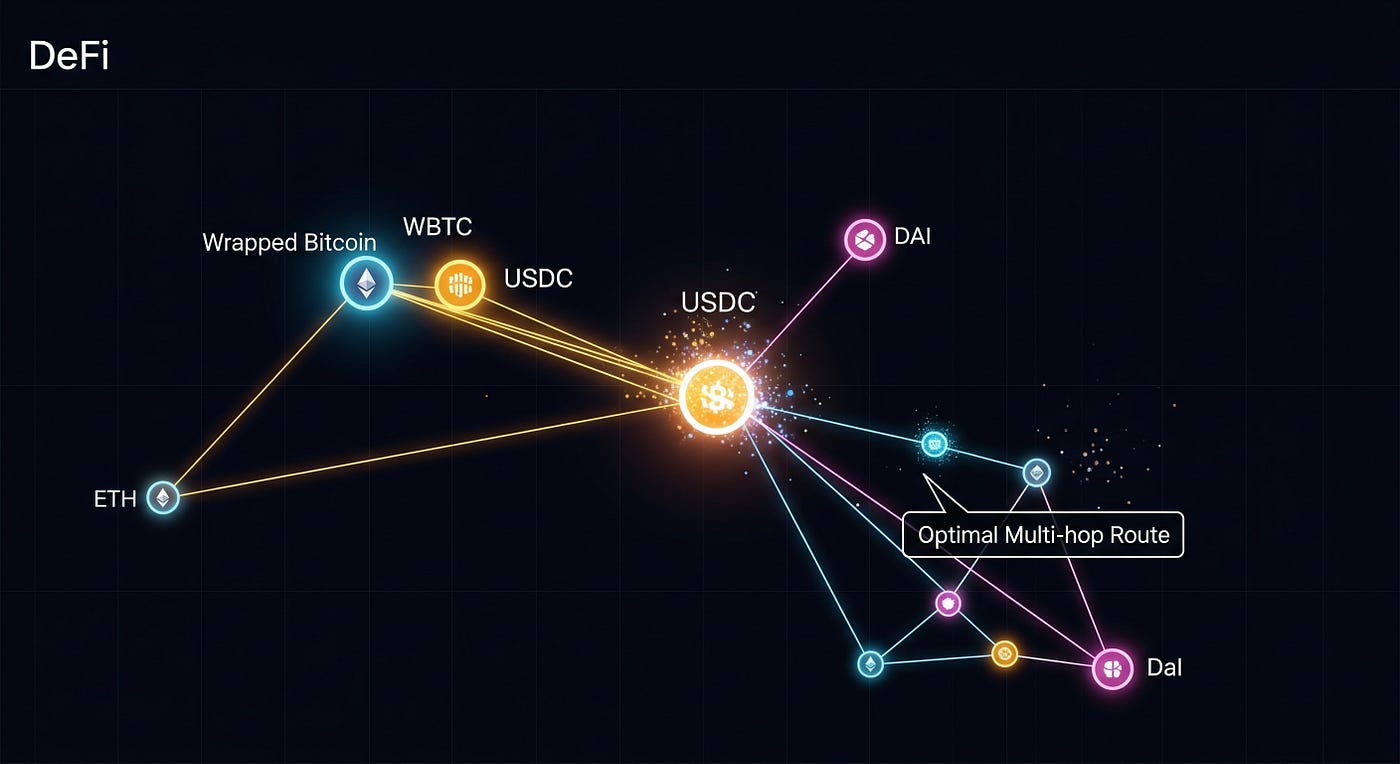
DEX Aggregation Cross-Chain: Liquidity Unleashed
Cross-chain DEX aggregators aren't hype; they're the execution layer dominating 2026. Rango Exchange pits them against traditional DEXs: superior liquidity depth, sub-second speeds, ironclad security sans bridges. 1inch's native swaps erase messaging protocols, cutting attack surfaces by 70% based on arXiv's cross-chain arbitrage studies exposing non-atomic MEV pitfalls.
Shoal. gg nails it: intent-based architectures boost UX while fortifying anti-MEV mechanisms. Off-chain RFQs from CoW DAO's arsenal reduce exposure, but SolverRouter's solver competition yields equitable pricing, ideal for retail crushed in volatile swings. IdeasOfT. io ranks these top for MEV protection and smooth retail flows; fusion modes enable gas-free ops, vital as account abstraction integrates, letting solvers front fees deducted from outputs.
MEV Protection Swaps: Fortify Your Edge
MEV isn't dead; it's multi-chain now, per Blocknative fundamentals. Cross-chain arbitrages, dissected in arXiv papers, thrive on opacity, but chain-agnostic solvers flip the script. RootData tags CoW Swap for batch auction MEV shields, yet 2026 standards from Uniswap Labs and Across unify cross-chain intents, pooling fillers for decentralized dominance.
AI-driven stop-losses from Medium's Jung-Hua Liu preempt cascades, but pair them with SolverRouter's RFQ intent-based RFQ 2026 firepower: solvers preempt sandwiches, securing yields in altcoin chaos. Traders win wars here; speed and charts dictate, and these tools arm you ruthlessly.
Cryptonium. cloud charts this invisible layer: shared sequencers and aggregation abstract chains entirely. Dcentralab spotlights gasless intents lowering barriers, fueling mass adoption. But execution? That's where aggressive setups shine, maximizing alpha while rivals falter.




No comments yet. Be the first to share your thoughts!