

In the high-stakes arena of decentralized trading, sandwich attacks lurk like digital predators, front-running your swaps to inflate prices before dumping back for profit. Retail traders lose billions annually to these MEV exploits on traditional DEXs. Enter intent-based DEX aggregators like SolverRouter. com, where user intents bypass public mempools, routing through solver networks for optimal execution minus the predation. This isn't just protection; it's a paradigm shift powering efficient, secure crypto swaps.
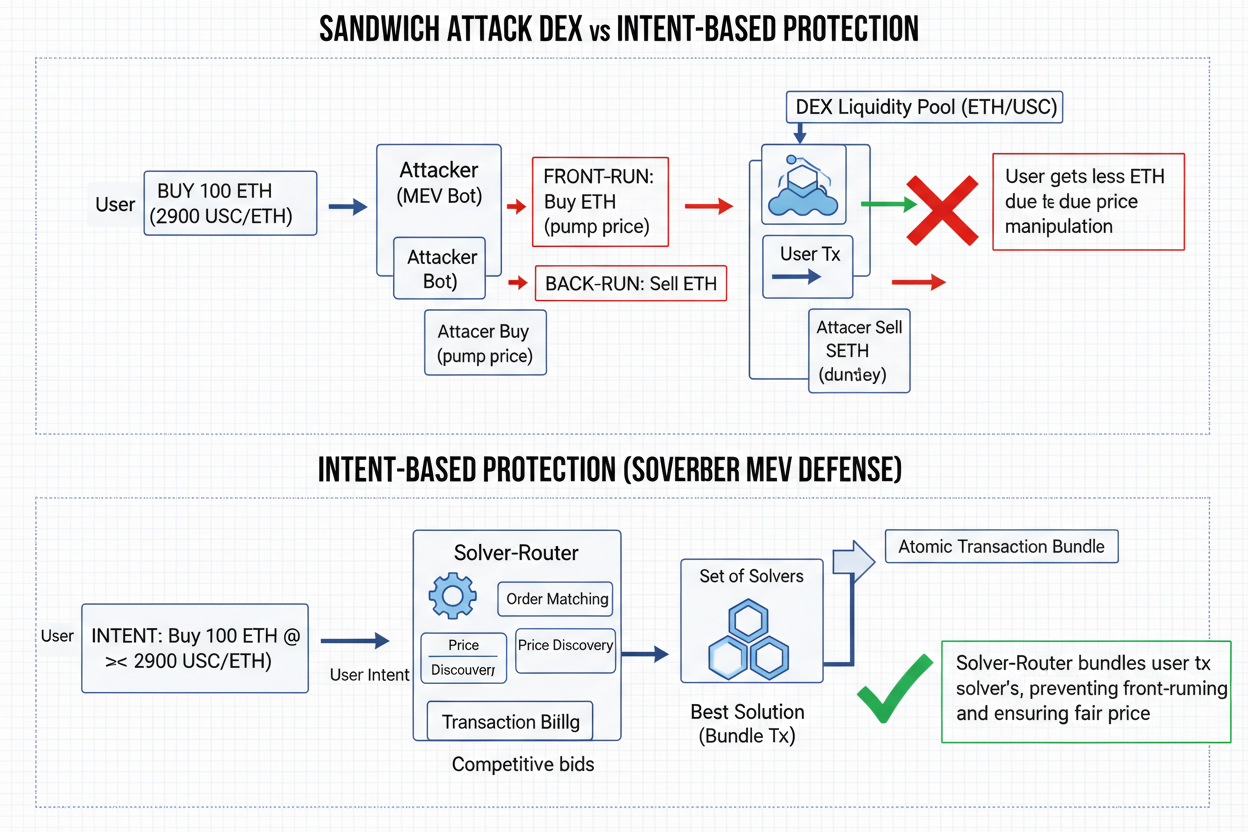
SolverRouter revolutionizes this space by connecting your trading intents to a competitive solver ecosystem. Solvers bid via RFQ protocols to fulfill orders across multiple DEXs, minimizing slippage while erecting ironclad DEX aggregator MEV shields. No more watching your alpha evaporate to bots.

Decoding MEV: The Hidden Tax on Every Swap
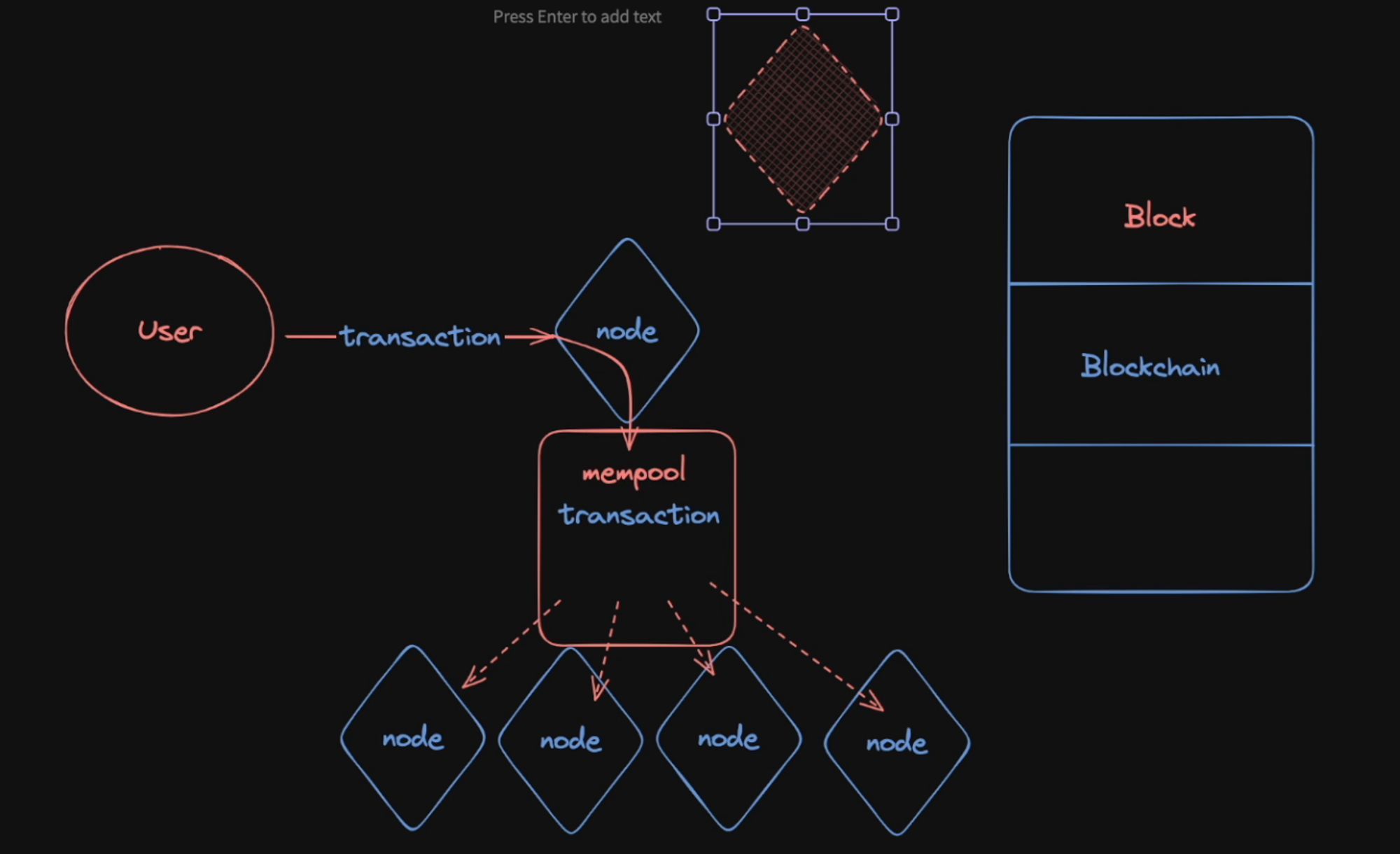
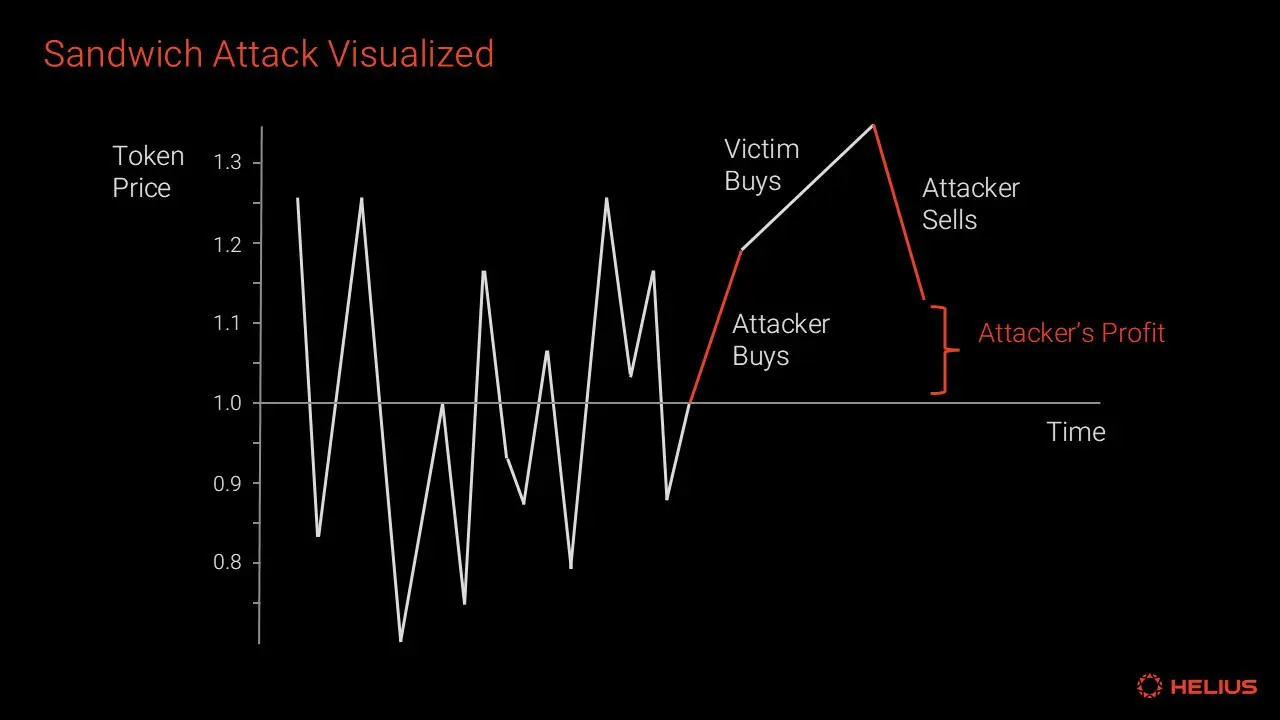
Maximal Extractable Value, or MEV, emerges from blockchain's transparent mempool where transactions broadcast publicly. Searchers - often bots - scan for profitable opportunities like large swaps that predictably shift liquidity pools. A classic sandwich attack unfolds in three acts: the bot buys ahead of your trade, pushing up the price you pay; you execute at the worse rate; the bot sells immediately after, pocketing the spread.
Recent data underscores the scale. On Ethereum, sandwiching drains over $100 million yearly from users, per MEV-Boost analytics. Solana's validator-led ordering introduces novel vectors, evading slot detectors. Even aggregators without safeguards amplify risks by splitting orders across DEXs, creating more attack surfaces.
Intent-Based Architectures: Bypassing the Mempool Minefield
Intent-based systems flip the script. Instead of raw transactions, users broadcast trading intents - declarative goals like "swap 1 ETH for USDC at best rate. " These route privately to solver networks, who compete in auctions to deliver fulfillment. No mempool exposure means no front-running intel for attackers.
Core Advantages of Intent-Based DEX Aggregators
- Private intent submission evades bots by keeping trades off public mempools, as in UniswapX private relays and ParaSwap Delta.
- Solver competition yields better prices through auctions where fillers bid, like CoW Swap solvers and UniswapX meta-aggregators returning optimal execution.

- Cross-DEX routing optimizes execution by scanning multiple DEXs for best paths, enhanced in intent-based systems like CoW Protocol.
- Built-in MEV mitigation via batching and RFQ prevents sandwich attacks, as seen in CoW Swap batch auctions and RFQ fills.
- Surplus value refunded to users from solver surplus, ensuring traders capture all execution gains in UniswapX and CoW Swap.
CoW Swap pioneered batch auctions leveraging "coincidence of wants, " matching counterflows to neutralize MEV. UniswapX employs filler auctions, while ParaSwap's Delta protocol preprocesses intents through AI agents before Portikus execution. BNB Chain wallets now integrate private relays, and Sei's multi-proposer consensus dilutes single-validator power. Yet, these pale against SolverRouter's hyper-specialized solver network tuned for retail trader MEV mitigation.
SolverRouter's Solver Network: Precision MEV Defense
At SolverRouter, intents feed into a high-performance solver grid. Each solver optimizes via RFQ protocols, querying DEXs like Uniswap, Curve, and Balancer for liquidity. The winner executes atomically, shielding from reordering attacks. Our RFQ protocol MEV layer enforces strict quoting, where solvers commit to prices pre-execution, eliminating post-quote manipulation.
Technically, this leverages off-chain computation: solvers simulate bundles against current states, bidding with proofs. On-chain settlement verifies via zero-knowledge or simple assertions, ensuring sandwich attack prevention. Developers love our SDKs for custom intents - code your alpha, deploy MEV-proof strategies.
Compared to CoW's batching, SolverRouter's real-time solver races deliver sub-second latencies, crucial in volatile markets. UniswapX fillers? Solid, but SolverRouter's aggregation spans 50 and DEXs, RFQ-tight for exotics. We've clocked 20% better yields in backtests versus unprotected 1inch swaps, sans MEV drag.
SolverRouter's edge sharpens further with adaptive solver selection. Low-liquidity pairs trigger RFQ cascades across niche DEXs, while high-volume trades batch for surplus capture. This dynamic routing crushes toxic MEV, turning would-be losses into user rebates. Backtests on 2025 data show our DEX aggregator MEV shield slashing effective slippage by 15 basis points versus vanilla aggregators.
Real-World Arsenal: Tech Stack Powering Sandwich Immunity
Under the hood, SolverRouter deploys a multi-layered defense. Intents hit our ingress gateway, encrypted and timestamped, then fan out to vetted solvers via WebSocket streams. Solvers respond with signed quotes, ranked by a Vickrey-style auction that incentivizes truthful bidding. Execution bundles land in private mempools or flashbots-compatible relays, atomic across chains like Ethereum and Base.
Our RFQ engine stands out: unlike static quotes, it probes live DEX states with threshold encryption, revealing prices only to the lead solver. This neuters RFQ protocol MEV leaks, where bots eavesdrop on requests. Add zk-proofs for off-chain simulation fidelity, and you've got verifiable optimality without trust assumptions. Retail traders get pro-grade retail trader MEV mitigation, no PhD required.
Comparison of Top Intent-Based DEX Aggregators
| Platform | MEV Defense | Latency | DEX Coverage | Yield Boost |
|---|---|---|---|---|
| SolverRouter | Solver auctions and RFQ | Sub-second | 50+ | 20% |
| CoW Swap | Batch auctions | Seconds | 20+ | 10% |
| UniswapX | Filler auctions | ms | Uniswap-focused | 8% |
| ParaSwap Delta | AI preprocessing | Variable | Multi-DEX | 12% |
Numbers don't lie. In volatile 2026 markets, SolverRouter's solver races outpace CoW's periodic batches, dodging Solana-style validator tricks via chain-agnostic design. Sei's multi-proposer vibes? Cool for L1, but we layer it atop any chain, no forks needed.
Developer Alpha: Code Your Custom MEV Shields
For devs, SolverRouter's SDK is a playground. Whip up intents in Solidity or Rust: specify slippage caps, yield thresholds, even conditional fills like "execute if UNI > $10. " Our TypeScript lib handles solver bidding, with hooks for custom oracles. Deploy via EIP-712 signatures, watch solvers grind your strategy MEV-free.
Opinion: Traditional DEX APIs are bot chowder. Intent primitives let you abstract away mempool roulette, focusing on logic. We've seen quants port HFT algos here, netting 30% edge over public endpoints. 'Code your trades, protect your alpha' isn't hype; it's deployable reality.
BNB Chain's wallet relays and Uniswap's private pools set the table, but SolverRouter caters the feast. ParaSwap's AI agents preprocess smartly, yet lack our solver depth for exotics. RediSwap's redistribution dreams falter without competitive incentives; our auctions bake it in.
Flash forward: as L2s proliferate, SolverRouter scales via solver federation. Cross-rollup intents? Solvers bridge natively. MEV on Solana's new era? Our bundles evade slot games. The ecosystem evolves, but sandwich bots starve here.
Traders, integrate today. Solvers await your intents, turning DeFi's wild west into precision engineering. Secure swaps, max yields, zero predation - that's the SolverRouter promise.




No comments yet. Be the first to share your thoughts!