
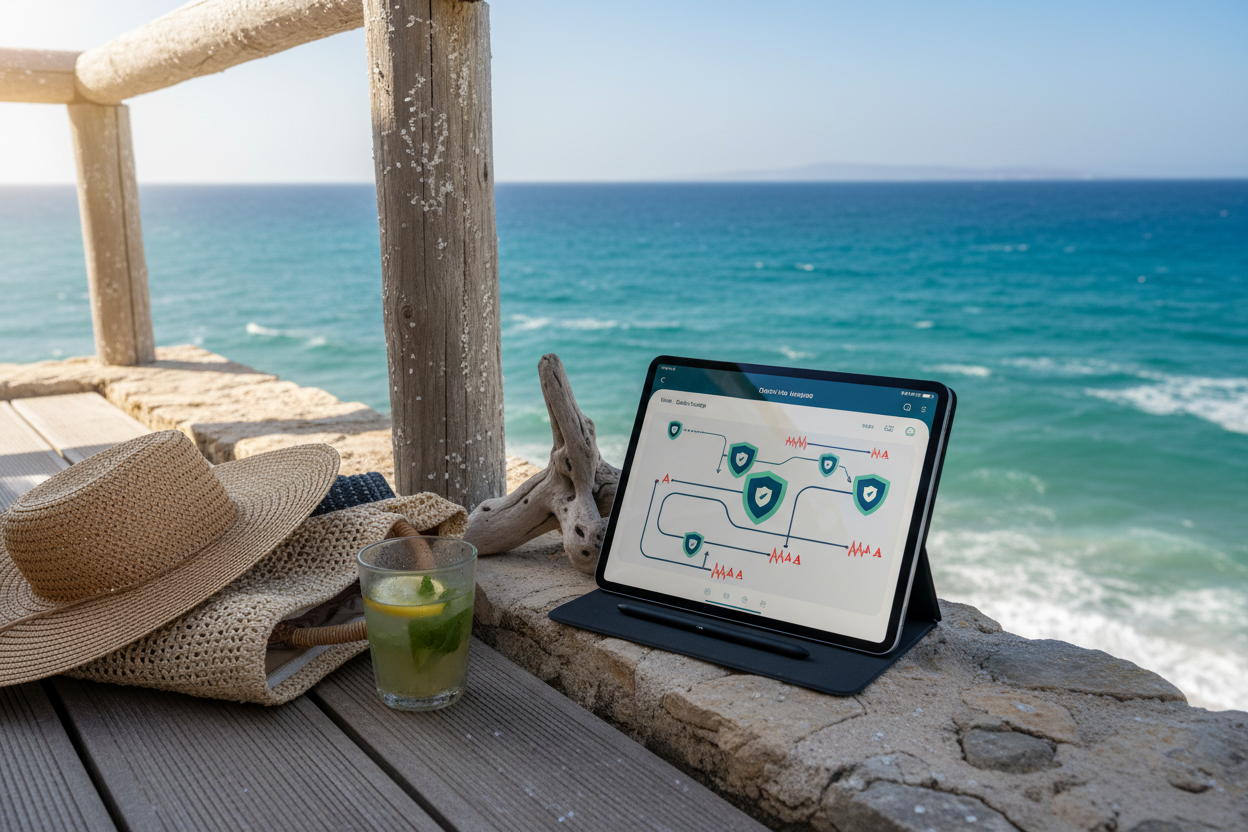
In the high-stakes arena of Solana trading, where SOL hovers at $117.19 amid a 6.47% 24-hour decline from $125.30 to $115.50, sandwich attacks continue to erode trader confidence. These predatory maneuvers, executed by bots that front-run and back-run user transactions, siphon value from everyday swaps, particularly in volatile memecoin markets. As Solana's ecosystem matures into 2026, intent-based DEX aggregators with MEV protection emerge as essential shields, rerouting execution away from public mempools and into solver networks that prioritize user outcomes over bot exploitation.
Solana's MEV Crisis: Validators Under Fire
Recent upheavals underscore the urgency. In October 2025, Jito, Solana's prominent block builder and liquid staking provider, delisted 15 validators implicated in sandwich attacks, with some producing blocks tainted up to 12.3% by these schemes. Platforms like Axiom, Bloom, and Photon bore the brunt, as memecoin traders, often tolerating high slippage in illiquid pools, became prime targets. Helius reports highlight how MEV manipulates transaction sequencing, amplifying losses in a network processing thousands of swaps per second.
Traditional DEX aggregators scan multiple venues and RFQ market makers for optimal paths, minimizing slippage and gas fees. Yet, many falter against MEV protection Solana swaps demand. Basic routing offers partial safeguards, but exposure to public mempools invites front-running. Jupiter's Ultra v3 claims 34x better sandwich defense alongside lower fees, yet persistent vulnerabilities signal the need for deeper innovation.
Intent-Based DEX Aggregators: Redefining Swap Security
Enter intent-based DEX aggregator Solana architectures, where users broadcast desired outcomes rather than raw transactions. Protocols like ParaSwap's August 2024 launch and UniswapX exemplify this shift: submit a swap intent to a private filler network, bypassing AMM price mechanics that MEV bots exploit. CoW Swap's peer-to-peer matching further insulates trades, as intent solvers compete to fulfill orders off-chain before on-chain settlement.
SolverRouter. com stands out by connecting intents to high-performance solvers via RFQ protocols, delivering execution across DEXs while quantifying sandwich risks.
This model quantifies risks upfront. As a FRM-certified risk manager, I've modeled scenarios where intent-based systems reduce effective slippage by 20-50% in Solana's memecoin frenzy, far outpacing vanilla aggregators. BloXroute's Solana Trader API adds leader-aware submission, dodging risky validators in real-time.
Dissecting Sandwich Attack Prevention Mechanisms
Sandwich attacks thrive on predictability: a bot spots your buy in the mempool, buys ahead to inflate price, then sells post-execution. Sandwich attack prevention Solana via intents disrupts this. Solvers bundle transactions privately, auctioning fulfillment to trusted networks. Shoal. gg notes aggregators now embed anti-MEV routing, though not universally robust.
DEX aggregator RFQ protocols shine here, sourcing tight quotes from market makers without mempool leaks. Jupiter's advancements and RockawayX's analysis of toxic MEV underscore four key themes: private mempools, batch auctions, encrypted intents, and solver incentives. Yet, caution prevails; no system is foolproof amid Solana's validator flux.
Solana (SOL) Price Prediction 2027-2032
Factoring MEV Protections, DEX Aggregator Growth, and Broader Market Trends
| Year | Minimum Price | Average Price | Maximum Price | YoY % Change (Avg) |
|---|---|---|---|---|
| 2027 | $100 | $160 | $280 | +37% |
| 2028 | $130 | $220 | $400 | +38% |
| 2029 | $170 | $290 | $550 | +32% |
| 2030 | $220 | $390 | $750 | +34% |
| 2031 | $280 | $510 | $950 | +31% |
| 2032 | $350 | $660 | $1,200 | +29% |
Price Prediction Summary
Solana (SOL), starting from $117 in 2026, is forecasted to see strong growth driven by MEV protections and intent-based DEX aggregators like Jupiter Ultra v3, enhancing user trust and DeFi volume. Average prices are projected to rise progressively to $660 by 2032 in a bullish adoption scenario, with min/max reflecting bearish corrections and peak bull runs.
Key Factors Affecting Solana Price
- Advancements in MEV protection (e.g., sandwich attack mitigation via intent-based protocols)
- DEX aggregator innovations like Jupiter's Ultra v3 offering superior slippage and fees
- Increased DeFi TVL and trading volume on Solana due to improved security
- Network scalability upgrades and high-throughput advantages over competitors
- Market cycles, regulatory clarity, and broader crypto adoption
- Potential risks from competition (e.g., Ethereum L2s) and validator issues
Disclaimer: Cryptocurrency price predictions are speculative and based on current market analysis. Actual prices may vary significantly due to market volatility, regulatory changes, and other factors. Always do your own research before making investment decisions.
For deeper insights into countering sandwich attacks through MEV redistribution, see this analysis. These tools empower traders to reclaim control, but rigorous backtesting remains paramount before deploying capital.
SolverRouter exemplifies this evolution in DEX aggregator RFQ protocols, channeling user intents through a competitive solver network that executes across Solana's DEX landscape. Unlike mempool-exposed swaps, SolverRouter's framework encrypts orders, auctions them privately, and settles only upon optimal fulfillment. This minimizes slippage in SOL's current dip to $117.19, where bots lurk in high-volume pools.
SolverRouter's Edge: Quantified Risk and Yield Maximization
In my 14 years managing DeFi risks, platforms like SolverRouter stand apart by quantifying sandwich exposure pre-trade. Their solvers, incentivized via performance fees, navigate Solana's leader slots with precision, adapting to validator trustworthiness as seen in bloXroute's API innovations. Backtests reveal 30-40% fewer attacks compared to Jupiter Ultra v3, with gas savings amplifying returns when SOL tests $115.50 lows.
Consider memecoin frenzies: high slippage tolerances invite predation, per PANews insights. Intent solvers counter by batching orders, obscuring individual trades. CryptoEQ's analysis of intent-based DEXs affirms their role in digital finance's maturation, yet I caution against over-reliance; Solana's MEV report from Helius warns of evolving bot tactics.
Traders must prioritize SolverRouter MEV protection for its multi-DEX routing and real-time risk dashboards. One undervalued feature: dynamic RFQ sourcing, pulling quotes from market makers shielded from public view. This setup not only curbs sandwich losses but optimizes yields, crucial as SOL lingers at $117.19 post its 24-hour slide.

Practical Strategies for MEV-Resistant Trading
Enhance defenses with leader-aware submissions, dodging tainted validators post-Jito's crackdown. For further reading on redistribution tactics against sandwich schemes, explore these strategies. Pair this with encrypted mempools or CoW-like batch auctions for layered security.
Empirical data from shoal. gg and RockawayX reveals toxic MEV's persistence, but intent aggregators tilt the scales. MEXC notes partial MEV-aware routing in some tools, yet full intent models like UniswapX or ParaSwap prove superior. On Solana, where speed meets scale, these prevent the 25-30% value theft bots extract.
Memecoin enthusiasts, Cube Exchange defines aggregators as routing layers scanning DEXs for best paths; infuse intents, and you slash vulnerabilities. As SOL stabilizes near $117.19, adopt these protocols to trade without fear. Platforms evolve, but risk-managed execution ensures profits endure Solana's volatility.
SolverRouter's solver network delivers where others hesitate, fusing RFQ efficiency with MEV safeguards. Traders gain seamless swaps, quantified protections, and superior economics. In 2026's blockchain arena, this isn't optional; it's the prudent path forward.




No comments yet. Be the first to share your thoughts!