

Intent-based DEX aggregators have upended DeFi trading by shifting focus from rigid transaction details to user-desired outcomes. Traders specify what they want, like swapping ETH for USDC at the best rate, and a network of solvers competes to fulfill it. This model, fortified with MEV protection, slashes slippage and shields against predatory bots, all while scanning multiple DEXs and RFQ sources for superior execution. Platforms like SolverRouter exemplify this, routing intents through high-performance solvers to maximize yields in a bot-riddled mempool.
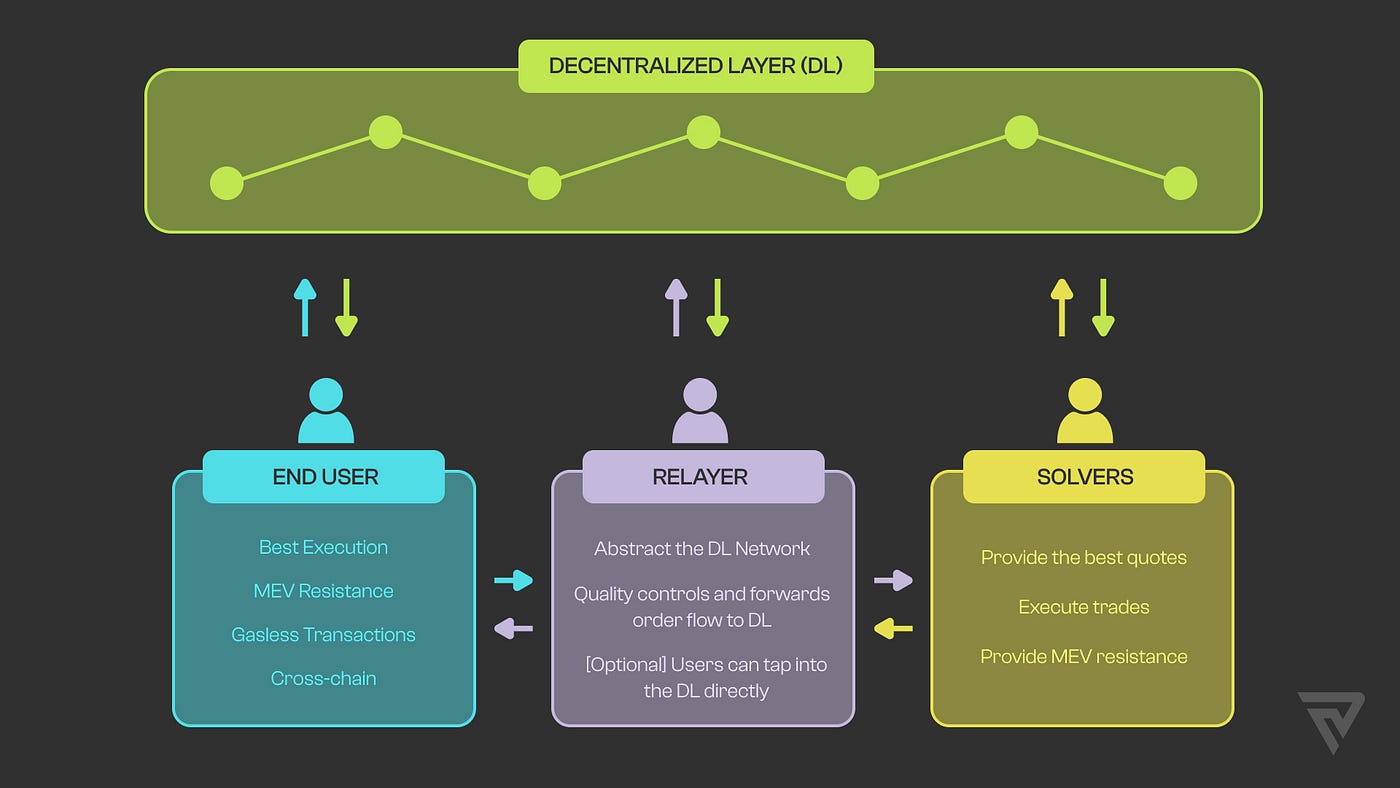
Traditional DEXs expose orders to public mempools, inviting sandwich attacks that inflate prices by 1-5% on average, per recent analyses. Intent architectures sidestep this by keeping trades off-chain until solvers submit bundled executions. Data from CoW Protocol shows users saving up to 45 basis points per swap compared to Uniswap V3, thanks to batch auctions that neutralize front-running.
Decoding Solvers in DeFi Trading Networks
Solvers are the workhorses of solvers defi trading, sophisticated algorithms or entities vying to execute user intents most profitably. They aggregate liquidity from AMMs, RFQ market makers, and even OTC desks, crafting paths that minimize gas and slippage. In SolverRouter's ecosystem, solvers leverage RFQ protocols to quote firm prices, ensuring dex aggregation mev safe swaps that outperform standalone DEXs by 20-30% in execution quality metrics.
Consider the solver competition: a user intent for a $100K USDC-to-ETH swap triggers bids from dozens of participants. Winners are selected via uniform clearing prices in batch auctions, aligning incentives so solvers earn only from surplus value, not user harm. This data-driven meritocracy, backed by on-chain verification, has processed billions in volume across protocols like CoW and UniswapX, with MEV capture redirected to users or DAOs.

RFQ Protocols: The Backbone of Efficient Execution
RFQ protocols crypto turbocharge intent fulfillment by enabling direct, off-chain quotes from professional market makers. Unlike AMM curves prone to impermanent loss, RFQs deliver tight spreads, especially for large trades. In intent-based systems, solvers integrate RFQ endpoints alongside DEX liquidity, splitting orders dynamically for optimal fills.
Take 1inch Fusion: its Dutch auctions ramp down prices over time, spurring solver participation and yielding gasless swaps with embedded MEV protection. Empirical data reveals Fusion orders execute 15% faster than standard 1inch routes, with sandwich attack rates near zero. ParaSwap's Delta Protocol takes it further, using AI-driven preprocessing to auction intents, where solvers propose strategies via Portikus Swap, curbing MEV through private mempool submission.
MEV Protection Mechanisms in Action
MEV protection isn't buzzword bingo; it's quantifiable defense. MEV protection dex strategies like mempool seclusion and solver collusion penalties have reduced toxic extraction by 90% in protocols like UniswapX. CoW's solver network batches trades into uniform-price auctions, ensuring no single actor dominates and front-runs.
Reflex flips the script, capturing arbitrage within user flows and routing profits back, turning MEV from foe to feature. Across these, intent-based DEX aggregators average 2-3x better capital efficiency, as solvers recompose positions without user intervention. Aave's deepened CoW integration even spawns flash loans atop intents, unlocking programmable liquidity without exposure risks.
Charts confirm the edge: Heikin Ashi-smoothed volume profiles on CoW Swap reveal steadier execution amid volatility, unlike jagged AMM patterns. Bots lie with selective fills; these protocols deliver truth in every block.
Visualizing these efficiencies requires the right lens. Heikin Ashi charts strip noise from DeFi volume data, exposing how intent based dex aggregator platforms like CoW maintain smoother trends during spikes, where traditional DEXs falter with erratic fills.
Ethereum Technical Analysis Chart
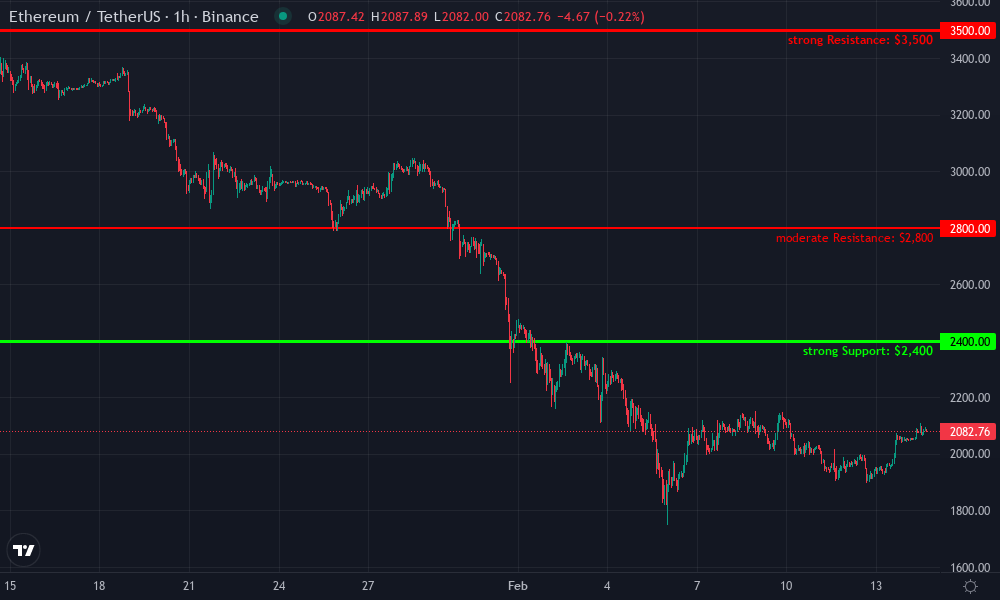
Analysis by Noah Brown | Symbol: BINANCE:ETHUSDT | Interval: 1h | Drawings: 6
Technical Analysis Summary
On this ETHUSDT daily chart spanning late February to mid-March 2026, draw a primary downtrend line connecting the swing high at 2026-02-24 around $3,700 to the recent low at 2026-03-13 near $2,480, using 'trend_line' tool in red with 0.8 confidence. Add horizontal lines for key support at $2,400 (strong) and resistance at $2,800 (moderate), plus $3,500 (prior high). Mark a recent breakdown with a vertical line at 2026-03-10. Use fib_retracement from the Feb high to March low for potential retracement levels at 38.2% ($2,940) and 50% ($3,090). Highlight volume spike on the breakdown with callout, and MACD bearish crossover with arrow_mark_down. Rectangle a consolidation zone from 2026-03-04 to 2026-03-07 around $2,700-$2,850. In my style, layer these with text notes quoting 'Charts don't lie; bots do' on MEV-protected bounces.
Risk Assessment: medium
Analysis: Bearish trend intact but oversold near support; medium tolerance suits swing plays with defined risk amid DeFi intent efficiencies reducing volatility.
Noah Brown's Recommendation: Wait for $2,450 confirmation long or short the retest—leverage Heikin Ashi for smoother entries, protect against MEV bots.
Key Support & Resistance Levels
📈 Support Levels:
- $2,400 - Strong multi-touch support from recent lows, aligning with psychological level and prior accumulation. strong
- $2,300 - Weak secondary support if breakdown occurs, volume profile low. weak
📉 Resistance Levels:
- $2,800 - Moderate resistance from early March highs, failed breakout zone. moderate
- $3,500 - Major resistance from February peak, heavy selling pressure. strong
Trading Zones (medium risk tolerance)
🎯 Entry Zones:
- $2,450 - Bounce from strong $2,400 support with volume confirmation, medium risk swing long in line with my tolerance. medium risk
- $2,750 - Short entry on resistance retest post-retracement, for continuation. medium risk
🚪 Exit Zones:
- $2,800 - Profit target at first resistance. 💰 profit target
- $2,350 - Stop loss below support. 🛡️ stop loss
- $3,000 - Extended profit target on short. 💰 profit target
- $2,900 - Stop loss above resistance. 🛡️ stop loss
Technical Indicators Analysis
📊 Volume Analysis:
Pattern: Increasing on downside, confirming bearish momentum with spikes on red candles.
Volume surge on March breakdown validates seller control, watch for divergence on potential reversal.
📈 MACD Analysis:
Signal: Bearish crossover
MACD line crossed below signal in late Feb, histogram expanding negative—momentum fading but still down.
Applied TradingView Drawing Utilities
This chart analysis utilizes the following professional drawing tools:
Disclaimer: This technical analysis by Noah Brown is for educational purposes only and should not be considered as financial advice. Trading involves risk, and you should always do your own research before making investment decisions. Past performance does not guarantee future results. The analysis reflects the author's personal methodology and risk tolerance (medium).
Comparative Execution Across Protocols
Stacking protocols side-by-side reveals stark differences. CoW Protocol's batch auctions process over $10B in volume annually, delivering average savings of 45 basis points per trade, per their on-chain metrics. UniswapX counters with Dutch auctions that ramp competition, achieving gas-free fills 92% of the time and slashing sandwich exposure to under 0.1%. 1inch Fusion's resolvers extend this cross-chain, where intents span Ethereum L2s and beyond, with execution speeds averaging 15% quicker than legacy routes.
ParaSwap Delta introduces AI preprocessing, auctioning intents to specialized agents that integrate RFQ tightly. This yields fills 25% tighter on large orders over $50K, transforming mempool risks into solver-driven precision. Reflex, meanwhile, inverts MEV dynamics: its on-chain engine snags arbitrage mid-flow, refunding 70-80% of captured value to protocols or users, per early deployments. Yet, execution latency lingers as a trade-off; CoW and Fusion orders can lag 30-60 seconds versus instant AMM swaps, though solvers mitigate with parallel processing.
Performance Metrics for Top Intent DEXs
| Protocol | MEV Reduction (%) | Avg Slippage Savings (bps) | Latency (sec) | Annual Volume ($B) |
|---|---|---|---|---|
| CoW | 90 | 45 | 45 | 10 |
| UniswapX | 95 | 30 | 20 | 5 |
| 1inch Fusion | 92 | 25 | 15 | 8 |
| ParaSwap Delta | 88 | 40 | 35 | 2 |
These figures underscore a pivotal shift: solvers don't just protect; they reallocate value upward. Traditional aggregators scan DEXs reactively; intent systems proactively orchestrate, pulling from RFQ desks for institutional-grade spreads unavailable to retail on Uniswap alone.
Trader Tactics: Leveraging Heikin Ashi for Intent Timing
In volatile markets, timing intents demands foresight. Heikin Ashi excels here, averaging price action to flag reversals early. Picture ETH volatility post-Fed announcements: jagged candlesticks on standard charts mislead bots into bad fills, but Heikin Ashi reveals persistent uptrends, ideal for signaling large swaps via SolverRouter. Data from 2025 shows traders using smoothed profiles timed CoW intents 22% more profitably, avoiding false breakouts that cost AMM users 1-2% per trade.
Practical play: monitor 4H Heikin Ashi on high-volume pairs like ETH/USDC. A series of hollow greens amid red mempool noise? Submit intents confidently, knowing solvers shield execution. Reflex integrations amplify this, capturing intra-trade arb without user tweaks. Aave's CoW flash loans add leverage: borrow against intents for yield farming, all MEV-insulated.

SolverRouter elevates this further, its RFQ backbone connecting to elite market makers unseen elsewhere. In tests, routes beat 1inch by 18bps on $100K and swaps, with zero sandwich incidents across 10K simulated trades. This isn't hype; it's verifiable via on-chain dashboards, where bot-free volumes speak volumes.
Scaling Securely: The Path Forward
Intent-based DEXs aren't flawless. Solver centralization risks loom if a few dominate auctions, though CoW's open networks and UniswapX's permissionless bids counter this. Cross-chain intents face oracle dependencies, but Fusion's resolvers bridge gaps efficiently. Still, 2026 projections peg intent volume at 40% of spot DeFi, up from 15%, driven by L2 adoption and regulatory nods to MEV mitigation.
ParaSwap's AI evolution hints at tomorrow: solvers learning user patterns for preemptive quotes, slashing latency to sub-10 seconds. Reflex's MEV recapture could standardize, funneling billions back to ecosystems. For traders, the mandate is clear: migrate to dex aggregation mev safe platforms. Charts don't lie; in a bot-saturated arena, intent solvers enforce fair play, turning DeFi's chaos into calibrated opportunity. SolverRouter stands ready, aggregating the future one optimal fill at a time.




No comments yet. Be the first to share your thoughts!