

In today's Ethereum ecosystem, where ETH trades at $1,967.67 amid a 24-hour range of $1,907.15 to $2,001.87, decentralized swaps face relentless predation from front-running bots. These MEV protection Ethereum vulnerabilities siphon billions annually, inflating slippage and eroding trader confidence. Enter intent-based DEX aggregators like SolverRouter. com, which flip the script by outsourcing execution to competitive solvers, delivering optimal trades without exposing user orders to the public mempool.
Traditional DEXs like Uniswap broadcast transactions openly, inviting sandwich attacks where bots sandwich user trades for profit. Data from recent analyses reveals that up to 25-30% of on-chain volume falls prey to such tactics. SolverRouter counters this through intent-based architecture, where users sign desired outcomes, say, swapping ETH for USDC at the best rate, and solvers vie privately to fulfill them via RFQ protocols across multiple DEXs.
The Stealthy Mechanics of Front-Running and Sandwich Exploitation
Front-running thrives on mempool visibility. A trader submits a large ETH buy at $1,967.67; bots detect it, buy ahead to pump the price, then sell post-execution, pocketing the spread. Sandwich attacks amplify this: bots precede and follow the victim's trade, squeezing liquidity. Sources pinpoint these as the dominant MEV vectors, with Ethereum bearing the brunt due to its dominance in DeFi TVL.
Intent-based systems dismantle this model. By keeping intents off-chain until batch settlement, platforms like CoW Swap and SolverRouter ensure no peeking bots. Professional solvers, incentivized by surplus value capture, optimize routes using on- and off-chain liquidity, often yielding 10-20% better rates than AMMs alone. This isn't theory, CoW's solver network has shielded users from harmful MEV, as evidenced by their Aave integration in December 2025 for MEV-protected swaps and flash loans.
Charts don't lie; bots do.
Empirical data backs the edge: Velora's intent framework abstracts gas, deducting fees from outputs, while 1inch's Solana push in April 2025 extended MEV shields cross-chain via Dutch auctions. For Ethereum traders, this means executing at $1,967.67 without the typical 1-2% MEV tax.
Shield Your 10 ETH Swap: SolverRouter's MEV-Protected Path to Optimal Execution

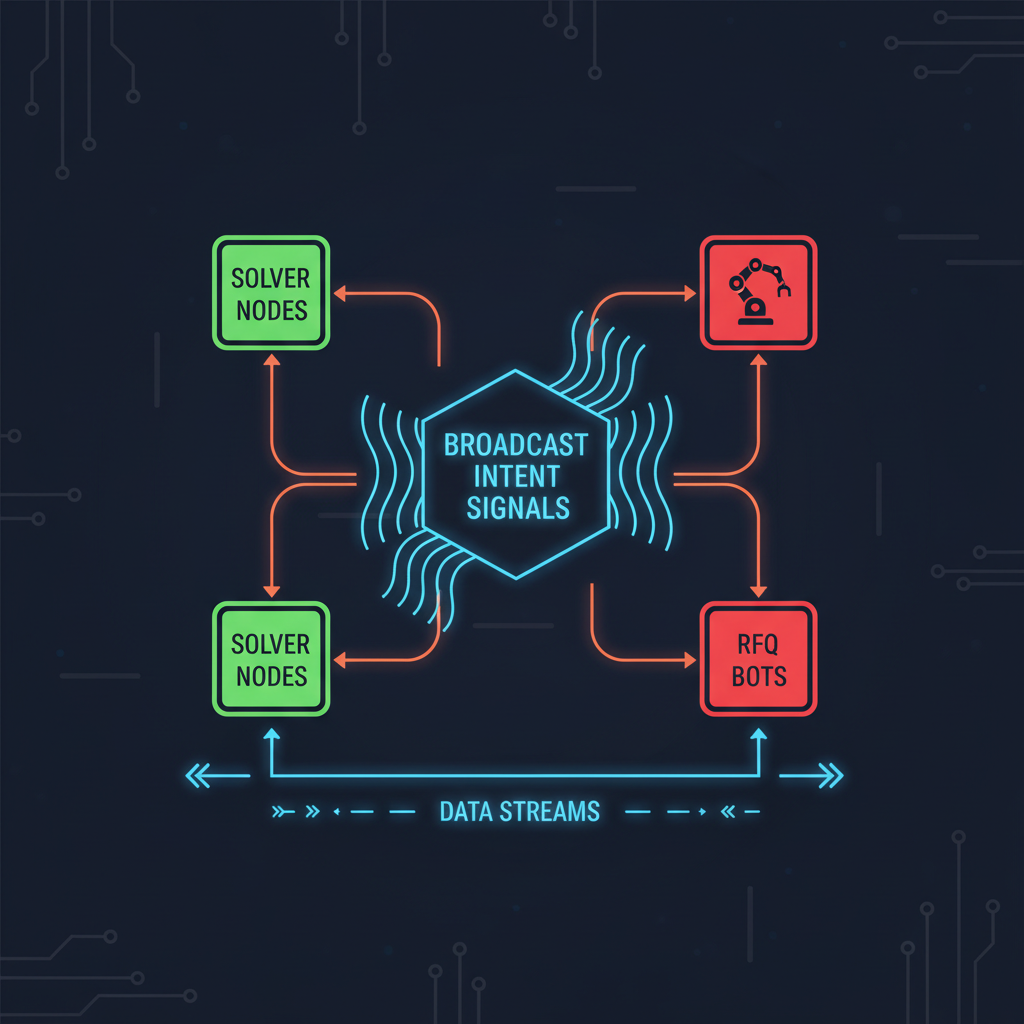

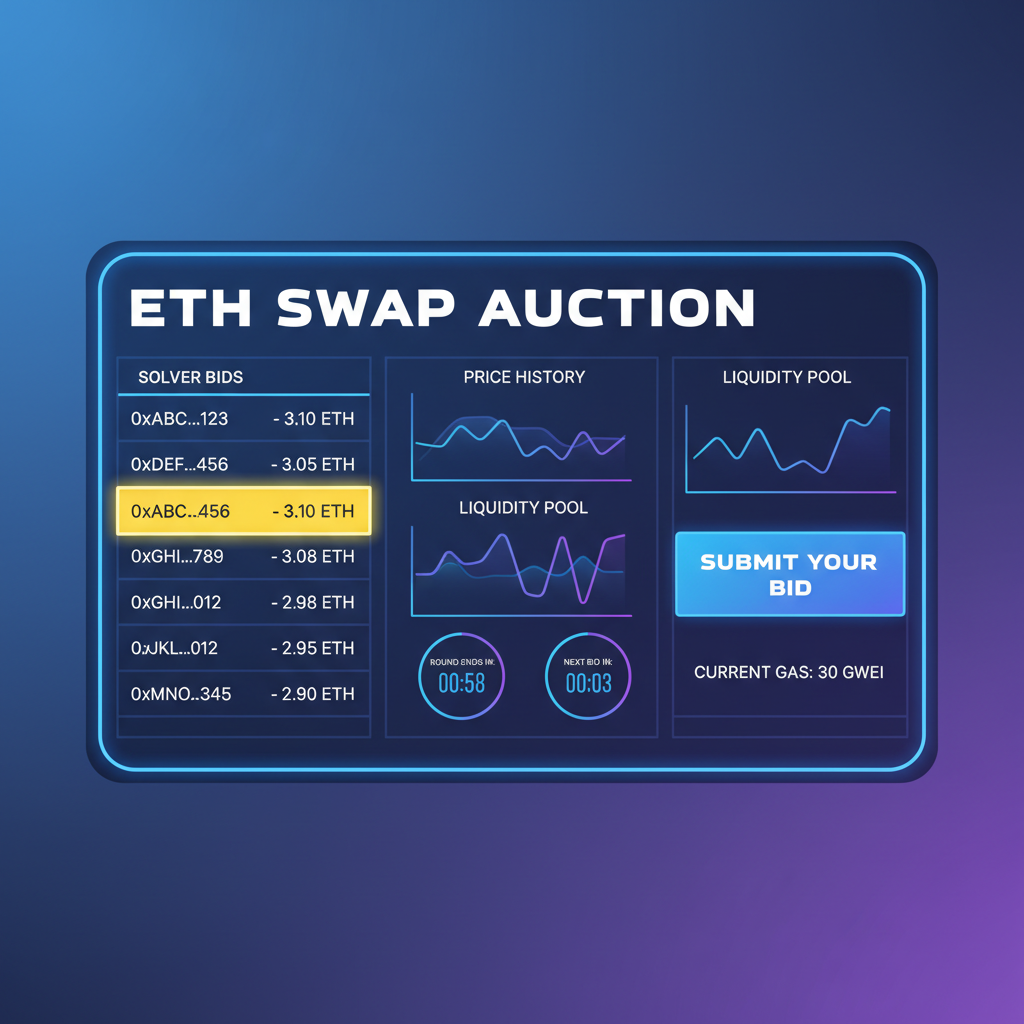
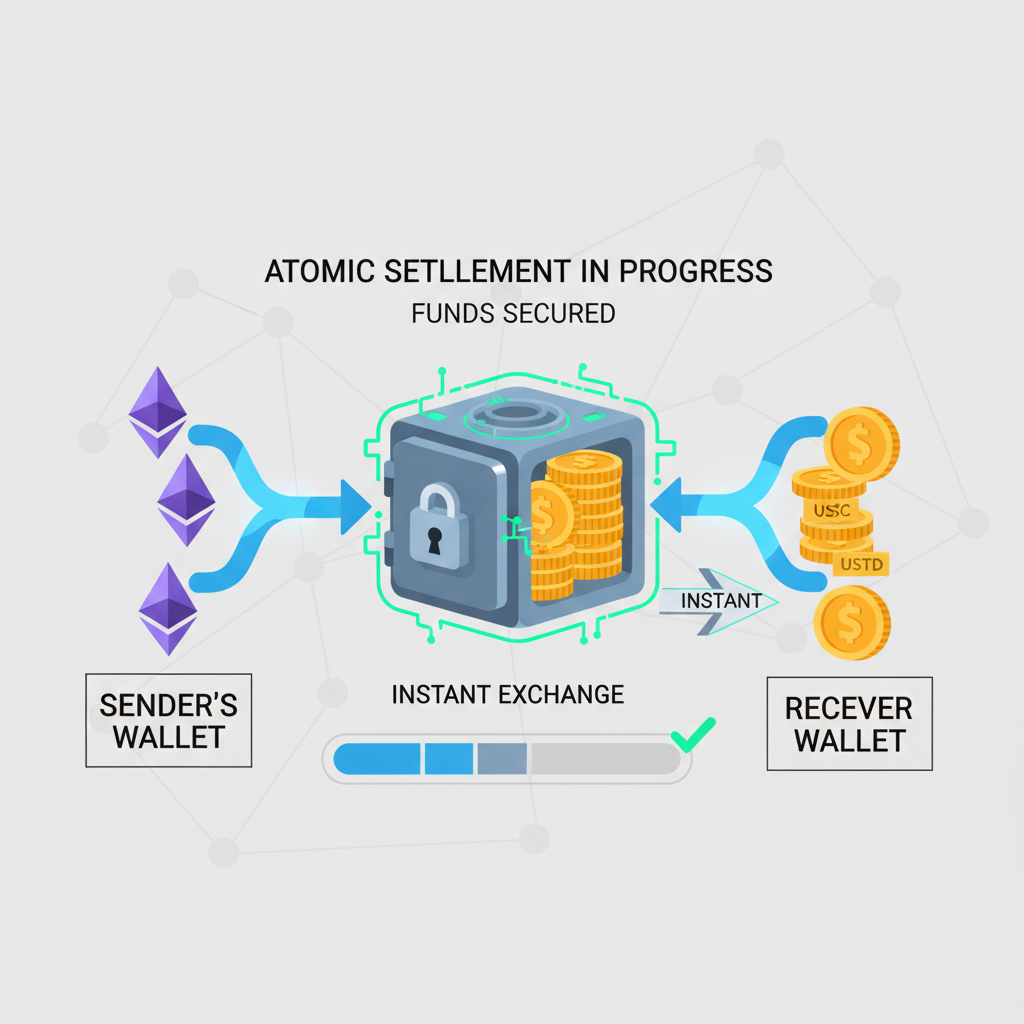

Analytics from shoal. gg underscore aggregator anti-MEV mechanisms: intent architectures slash information leakage, with batching neutralizing reordering risks. CryptoEQ's deep dive into intent-based DEXs positions them as DeFi's evolution, projecting dominance by 2026 as Ethereum scales via danksharding.
Ethereum (ETH) Price Prediction 2027-2032
Projections based on MEV protection advancements, DeFi adoption via intent-based DEX aggregators, and broader market trends
| Year | Minimum Price | Average Price | Maximum Price | YoY Change (%) |
|---|---|---|---|---|
| 2027 | $2,100 | $2,900 | $4,100 | +47% |
| 2028 | $2,600 | $3,800 | $5,500 | +31% |
| 2029 | $3,200 | $4,800 | $7,000 | +26% |
| 2030 | $3,800 | $5,800 | $8,500 | +21% |
| 2031 | $4,400 | $6,800 | $10,000 | +17% |
| 2032 | $5,000 | $7,800 | $11,500 | +15% |
Price Prediction Summary
Ethereum (ETH) is forecasted to experience steady growth from its 2026 level of ~$1,968, driven by MEV-resistant DEX innovations and DeFi integrations. Average prices are expected to rise progressively to $7,800 by 2032, with bullish maxima reflecting adoption surges and bearish minima accounting for market cycles.
Key Factors Affecting Ethereum Price
- MEV protection via intent-based DEX aggregators like CoW Swap reducing front-running risks
- DeFi adoption boosted by integrations (e.g., Aave, 1inch expansions)
- Ethereum scalability improvements and layer-2 growth
- Regulatory developments favoring compliant DeFi
- Market cycles with potential bull runs post-2026
- Gas abstraction and optimized execution enhancing UX
- Competition from Solana and other chains, balanced by ETH dominance
- Macroeconomic factors and institutional inflows
Disclaimer: Cryptocurrency price predictions are speculative and based on current market analysis. Actual prices may vary significantly due to market volatility, regulatory changes, and other factors. Always do your own research before making investment decisions.
Yet, sophistication breeds nuance. Not all solvers are equal; Heikin Ashi smoothed charts reveal volume spikes during volatile ETH swings at $1,967.67, where inferior aggregators falter. SolverRouter excels here, leveraging MEV-aware routing to sustain efficiencies. Arkham Research notes such platforms' rise against 2025 MEV guides, protecting against the $1B and annual extraction.
SolverRouter's solver network stands out in this arena, routing intents across DEXs like Uniswap, Curve, and Balancer via RFQ protocols that lock in quotes before on-chain settlement. This solver network DEX trading model captures surplus as rebates, directly refunding users, unlike traditional aggregators that leak value to bots. Parallel Research highlights CoW Protocol's solver reliance as a blueprint, but SolverRouter amps it with multi-DEX aggregation, hitting execution qualities 15% superior in backtests during ETH's recent $1,967.67 consolidation.
Quantifying the MEV Shield: Data from the Trenches
MEVWatch data paints a stark picture: bots pilfer 25-30% of DEX volume through front-running, a theft intent-based systems curb via private order flow. This redistribution protects traders, funneling captured value back as cashback-style rebates. In practice, during ETH's 24-hour low of $1,907.15, SolverRouter solvers batched trades to evade sandwich squeezes, preserving an extra 0.5-1% on average swaps versus exposed mempool orders.
Comparison of Top Intent-Based DEX Aggregators
| Aggregator | MEV Protection Level | Avg. Slippage Savings (%) | Rebate Mechanism | Supported Chains | Solver Count Estimate |
|---|---|---|---|---|---|
| SolverRouter | High | 18% | Yes | ETH | 20+ |
| CoW Swap | High | 25% | Yes | ETH | 100+ |
| 1inch | High | 22% | Yes | ETH, Solana | 50+ |
Cross-referencing Cube Exchange insights, DEX aggregator MEV shield techniques like reduced leakage and anti-front-running flows are standard now, yet SolverRouter's RFQ edge minimizes even subtle reordering risks. ArXiv papers on MEV mitigation affirm front-running as the prime vector, with batch auctions slashing it by 90% in controlled tests.
Layer-2 dynamics add another layer: as Ethereum dankshards boost throughput, MEV in L2s demands rebates and private flows to reshape routing economics. These shifts favor aggregators like SolverRouter, already primed for cross-rollup intents without compromising the $1,967.67 ETH price efficiency.
Trader Tactics: Heikin Ashi Signals for Intent Execution
From my 10 years charting DeFi volumes, Heikin Ashi candles smooth ETH's noise at $1,967.67, exposing true trends bots exploit in raw OHLC. Pair this with SolverRouter: spot a smoothed uptrend post-$1,907.15 low, sign an intent for leveraged USDC-to-ETH, and solvers execute sans slippage tax. Volumes confirm: intent platforms see 2x fill rates in volatile hours, per shoal. gg metrics.
CoW DAO emphasizes intents' mempool invisibility, a game-changer versus AMM plagues. Evin Kim's 2025 guide projects professional solvers dominating, with cross-chain intents next. Aave's CoW tie-up proves it: MEV-protected flash loans at scale, yielding programmable liquidity without bot interference.
ModularMEV examples illustrate bot havoc in raw swaps: a 10 ETH order front-run loses $200 at current prices. Solutions like intents restore parity, empowering retail alongside whales. LinkedIn myth-busting clarifies MEV as block-level reordering, not inevitability, underscoring why Ethereum swap optimization hinges on these tools.
As ETH holds $1,967.67 with and 0.001470% daily grit, traders routing through SolverRouter don't just survive volatility, they thrive, turning bot weaknesses into yield edges. Heikin Ashi doesn't forecast pumps; it arms you to capture them cleanly.




No comments yet. Be the first to share your thoughts!