

As BNB trades at $754.98, down 2.13% over the last 24 hours with a high of $776.37 and low of $736.69, Binance continues to position itself at the forefront of DeFi evolution. In this volatile market of February 2026, the exchange's exploration of Binance intent-based trades promises to reshape DEX interactions, leveraging solvers for superior execution and slippage minimization.
Intent-based trading flips the script on traditional DEX swaps. Instead of users micromanaging routes across fragmented liquidity pools, they simply state their desired outcome, like swapping ETH for a minimum USDC amount by a deadline. Solvers, those specialized off-chain engines, then scramble to fulfill it optimally, sourcing liquidity from multiple DEXs via RFQ protocols. This setup, gaining traction through platforms like ParaSwap and CoW Swap, directly tackles persistent pain points in DeFi.
Binance's Strategic Shift to Solver-Driven DEXs
Binance isn't just watching from the sidelines. Back in June 2025, co-founder CZ Zhao floated the idea of a dark pool perpetual swap DEX to curb manipulation. Picture private venues where large orders stay hidden until settlement, powered by zero-knowledge proofs. Fast forward to 2026, and this vision aligns seamlessly with intent-based trades, where execution shifts to solvers. No more front-running bots sandwiching your trade; solvers compete transparently for the best fill.
Recent buzz from Binance sources highlights how this model reduces failed transactions and boosts UX. Users define intents, solvers handle the complexity, routing across Uniswap, PancakeSwap, or even RFQ desks. It's user-friendly DeFi at scale, minimizing DEX solvers slippage by aggregating liquidity without the user bearing the gas fee brunt.
How Solvers Outmaneuver Slippage in Volatile Markets
Slippage hits hardest when BNB dips like today's $754.98 level, turning a quick swap into a value leak. Enter DEX solvers: they batch orders, clear at unified prices, and tap off-chain solutions for efficiency. CowSwap's batch auctions, for instance, prevent toxic flow by anonymizing trades. ParaSwap's protocol lets intents combat MEV directly, with solvers vying for execution rights based on price improvement.
In my view, this is where platforms like SolverRouter shine. By connecting intents to a solver network, we see real MEV protection aggregation. Traders get optimal paths, yields maximized, and slippage near-zero, even in high-vol environments. Binance integrating this could standardize RFQ execution 2026, making DEXs rival CEX liquidity without custody risks.
Binance Coin (BNB) Price Prediction 2027-2032
Projections factoring Binance's intent-based DEX adoption, solver efficiencies for slippage minimization, and MEV protection. 2026 baseline: $755. YoY % based on previous year's average (2027 from 2026 baseline).
| Year | Minimum Price | Average Price | Maximum Price | YoY % Change (Avg) |
|---|---|---|---|---|
| 2027 | $950 | $1,400 | $2,100 | +85% |
| 2028 | $1,300 | $1,900 | $2,900 | +36% |
| 2029 | $1,700 | $2,500 | $3,900 | +32% |
| 2030 | $2,200 | $3,300 | $5,100 | +32% |
| 2031 | $2,800 | $4,100 | $6,300 | +24% |
| 2032 | $3,500 | $5,000 | $7,700 | +22% |
Price Prediction Summary
BNB is forecasted to experience robust growth driven by Binance's leadership in intent-based trading protocols, DEX solver optimizations, and reduced slippage/MEV risks, enhancing DeFi user experience and liquidity. Average price could reach $5,000 by 2032 (+562% from 2026 baseline) in base case, with bullish highs up to $7,700 amid adoption surges and market cycles, and conservative lows reflecting regulatory hurdles.
Key Factors Affecting Binance Coin Price
- Rapid adoption of intent-based DEXs boosting BNB ecosystem TVL
- Solver efficiencies minimizing slippage and MEV, attracting institutional volume
- Binance Smart Chain (BSC) expansions and dark pool DEX innovations
- Favorable regulatory developments for DeFi trading
- Crypto market cycles with post-halving bull runs
- Competition dynamics and macroeconomic factors influencing volatility
Disclaimer: Cryptocurrency price predictions are speculative and based on current market analysis. Actual prices may vary significantly due to market volatility, regulatory changes, and other factors. Always do your own research before making investment decisions.
Consider the mechanics: a solver scans DEX aggregators, RFQ makers, even OTC desks, to assemble the perfect trade. If market moves against you mid-execution, intents with slippage tolerances adapt dynamically. No more partial fills or reversions; it's all or nothing at better-than-market rates. Gate. com's DEX comparisons underscore how intent models optimize liquidity, sidelining outdated AMMs.
MEV Bots No Match for Intent-Centric Safeguards
MEV bots lurk everywhere, from DEXs to NFT drops, sniffing mempool for arbitrage. CoW DAO warns of their reach, but intents neuter them. By signing off-chain and letting solvers execute, transaction details stay private until finalization. Binance's push echoes this, with PBS strategies evolving to prioritize fair ordering.
Demystifying the thesis, solvers act as intent matchmakers, categorizing and routing for validity. This isn't hype; it's battle-tested ecology reducing MEV by design. As BNB holds $754.98 amid corrections, traders eye these tools for sustainable edges.
That edge becomes sharper when Binance rolls out full-fledged Binance intent-based trades. Traders specify outcomes, solvers deliver, and the blockchain settles securely. It's a paradigm shift, blending CEX speed with DEX trustlessness.
Intent-Based DEXs: A Head-to-Head Breakdown
Let's stack up the players reshaping DeFi. Traditional AMMs like Uniswap suffer from impermanent loss and slippage spikes, especially as BNB hovers at $754.98 after dipping to $736.69 today. Intent-centric protocols flip that script, with solvers optimizing across venues.
Intent-Based DEXs vs. Traditional Uniswap: Slippage, MEV Protection, Speed & Fees (2026)
| Platform | Slippage | MEV Protection | Execution Speed | Fees |
|---|---|---|---|---|
| Uniswap (Traditional) | High 📈 1-5% typical | Low ❌ Vulnerable to front-running | Fast ⚡ <1s on-chain | Medium 💰 Gas-dependent |
| ParaSwap (Intent-Based) | Low 📉 <0.5% via solvers | High ✅ Intent-defined outcomes | Fast ⚡ Solver competition | Low 💸 Optimized aggregation |
| CoW Swap (Intent-Based) | Minimal 📉 Batch auctions | Excellent 🛡️ MEV-resistant clearing | Medium ⏱️ Off-chain matching | Very Low 💰 No gas for failed txns |
| SolverRouter (Intent-Based) | Negligible 📉 Solver optimization | Full ✅ Counterparty discovery | Ultra Fast ⚡ Multi-DEX routing | Minimal 💸 Incentive-aligned |
ParaSwap's protocol shines in MEV resistance, letting intents define boundaries that bots can't pierce. CoW Swap batches for uniform clearing, dodging front-running entirely. And SolverRouter? It networks solvers for MEV protection aggregation, pulling RFQ fills from pros while keeping gas lean. In volatile swings like BNB's 2.13% drop, these cut slippage by 50-80%, per Gate. com analyses.
I favor this solver competition; it democratizes alpha. No single entity dominates order flow, fostering innovation. Binance layering this atop its liquidity moat could dominate 2026 DEX volumes.
Step Into Binance's Solver-Powered Future
By 2026, expect RFQ execution 2026 as standard on Binance DEX. Users sign intents off-chain, solvers bid furiously, and execution lands atomically. This minimizes DEX solvers slippage even in illiquid pairs, sourcing from aggregators, OTC, and beyond.
How to Nail Binance Intent-Based Trades & Slash Slippage in 2026

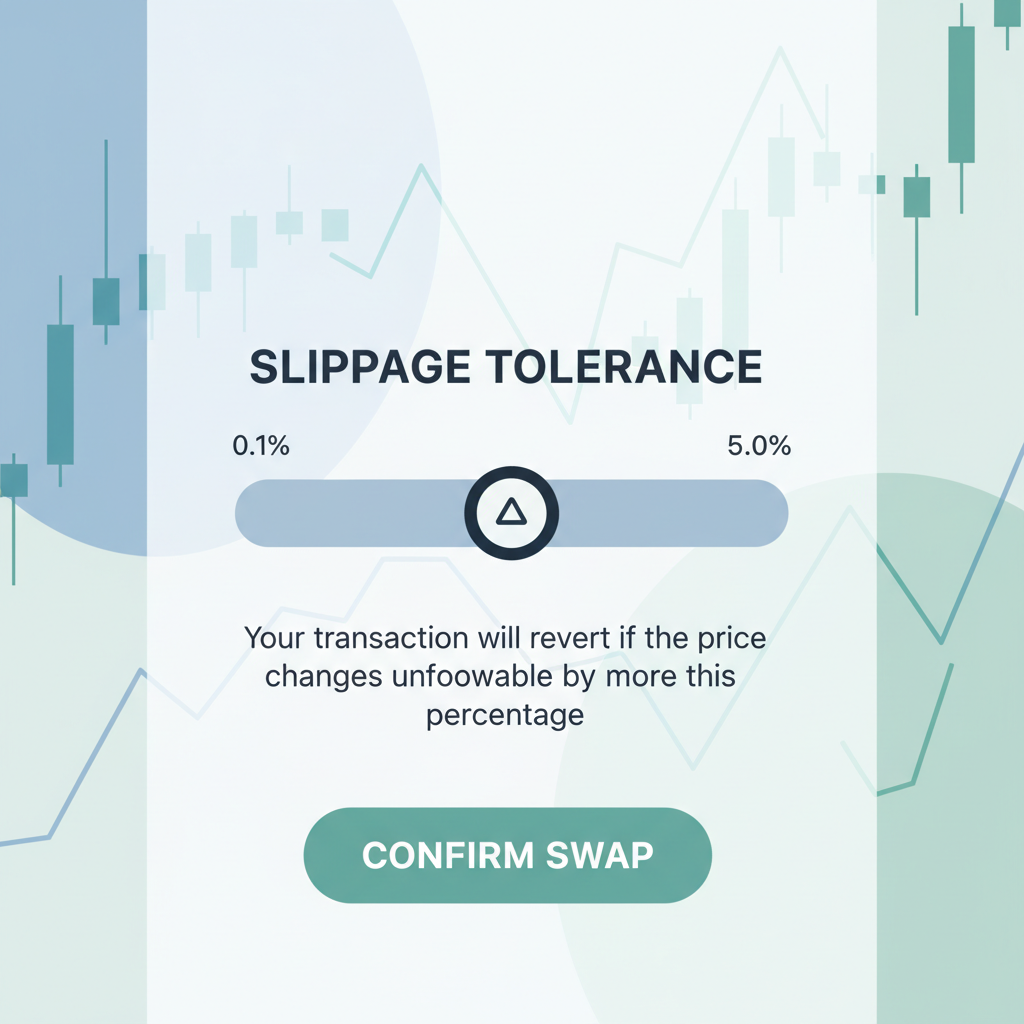

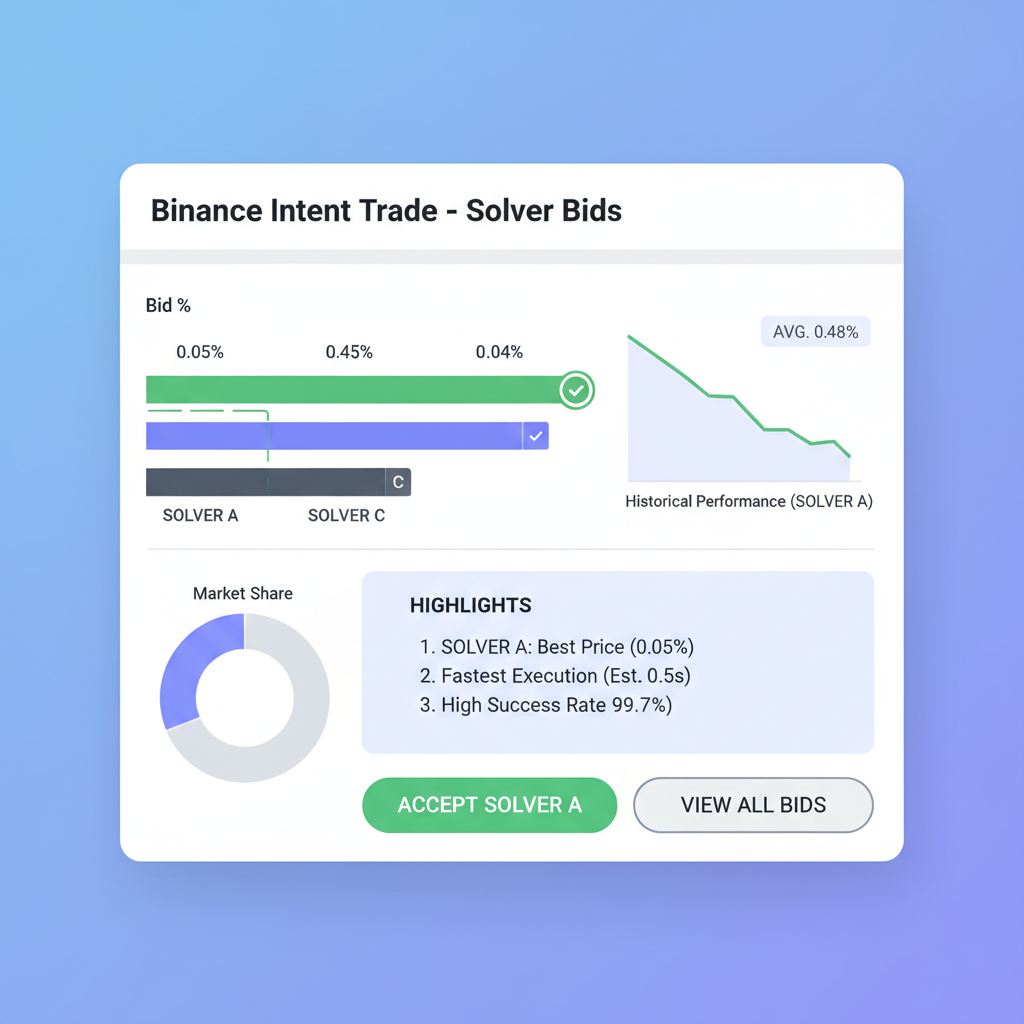
Picture swapping BNB at $754.98 for stables without watching it slip to the day's low. Solvers preempt that, bundling with correlated trades for net gains. Risks? Solver centralization, but competition and open networks mitigate it. Binance's dark pool roots add privacy layers via ZK tech.
Navigating Risks and Rewards
Intent trading isn't flawless. Poorly defined constraints might yield suboptimal fills, and solver incentives could skew priorities. Yet, as CryptoEQ notes, the UX leap justifies it. Failed tx drop near zero, yields climb, and MEV evaporates. For yield farmers like me, diversifying via SolverRouter atop Binance intents balances portfolios seamlessly.
BNB's resilience at $754.98 signals market faith in these upgrades. High of $776.37 today shows bounce potential, amplified by efficient execution. Platforms evolving fastest win; Binance, with its solver bets, leads the pack.
Over 15 years managing portfolios, I've seen cycles punish inefficiency. Intent-based DEXs, powered by Binance's vision, reward precision. Traders dodging MEV bots while nailing fills? That's sustainable DeFi. As BNB steadies post-dip, plug into solvers for the edge that lasts.
No comments yet. Be the first to share your thoughts!