In the high-stakes arena of 2026 DeFi, MEV protection DEX aggregators have become the battle-tested shields against predatory bots. VeloraDEX, the rebranded powerhouse formerly known as ParaSwap, exemplifies VeloraDEX intent-based trading, where users declare outcomes and let solvers clash for supremacy. This isn’t mere aggregation; it’s a paradigm shift enforcing solver competition multi-chain to crush front-running and sandwich attacks at their roots. As cross-chain liquidity explodes, Velora’s Delta architecture batches intents into uniform clearing auctions, delivering gasless swaps that prioritize execution over exploitation.

Founded in 2019, VeloraDEX surged ahead post its September 2025 rebrand, launching the $VLR token for governance and liquidity incentives. Traders now specify complex intents, like optimal cross-chain paths or yield-maximizing routes, and decentralized agents vie in real-time to fulfill them. This offloads execution from rigid algorithms to professional bots, slashing slippage and gas fees while embedding MEV safeguards protocol-deep. No more mempool leaks; intents stay private until batch settlement.
VeloraDEX Delta: Batch Auctions Neutralize MEV Exploits
At VeloraDEX’s core lies Delta, an intent execution 2026 engine that transforms trading vulnerability into fortified efficiency. Traditional DEXs expose orders to public mempools, inviting sandwich bots to profit at user expense. Velora flips the script: intents enter a sealed auction where solvers submit bids without visibility into rivals. Uniform clearing prices emerge, ensuring no single actor extracts undue value. Backtested against historical MEV events, this yields 20-50% better pricing versus legacy aggregators, per community audits.
Velora (formerly ParaSwap) enables one-click crosschain trading with gasless swaps, MEV protection, and intent-based execution.
Solvers, incentivized by fees and $VLR stakes, compete fiercely across chains like Ethereum, Arbitrum, and Base. Super Hooks strategies further amplify this, hooking into RFQ protocols for deep liquidity pulls. Result? Traders set goals, minimal slippage, max yield, and Velora handles the chaos, shielding against the $1B and annual MEV toll.
Solver Competition Fuels Multi-Chain Mastery
Solver competition multi-chain defines VeloraDEX style aggregators, pitting elite bots against each other in a Darwinian race for best fills. Unlike static routing, this dynamic marketplace aggregates liquidity from DEXs, CEXs, and OTC desks via intents. Agents bundle orders into bundles resistant to reordering attacks, settling via trusted verifiers. In 2026 benchmarks, Velora’s network processes 10x the volume of pre-intent eras, with 99.9% uptime across L2s.
VeloraDEX Key Features
-
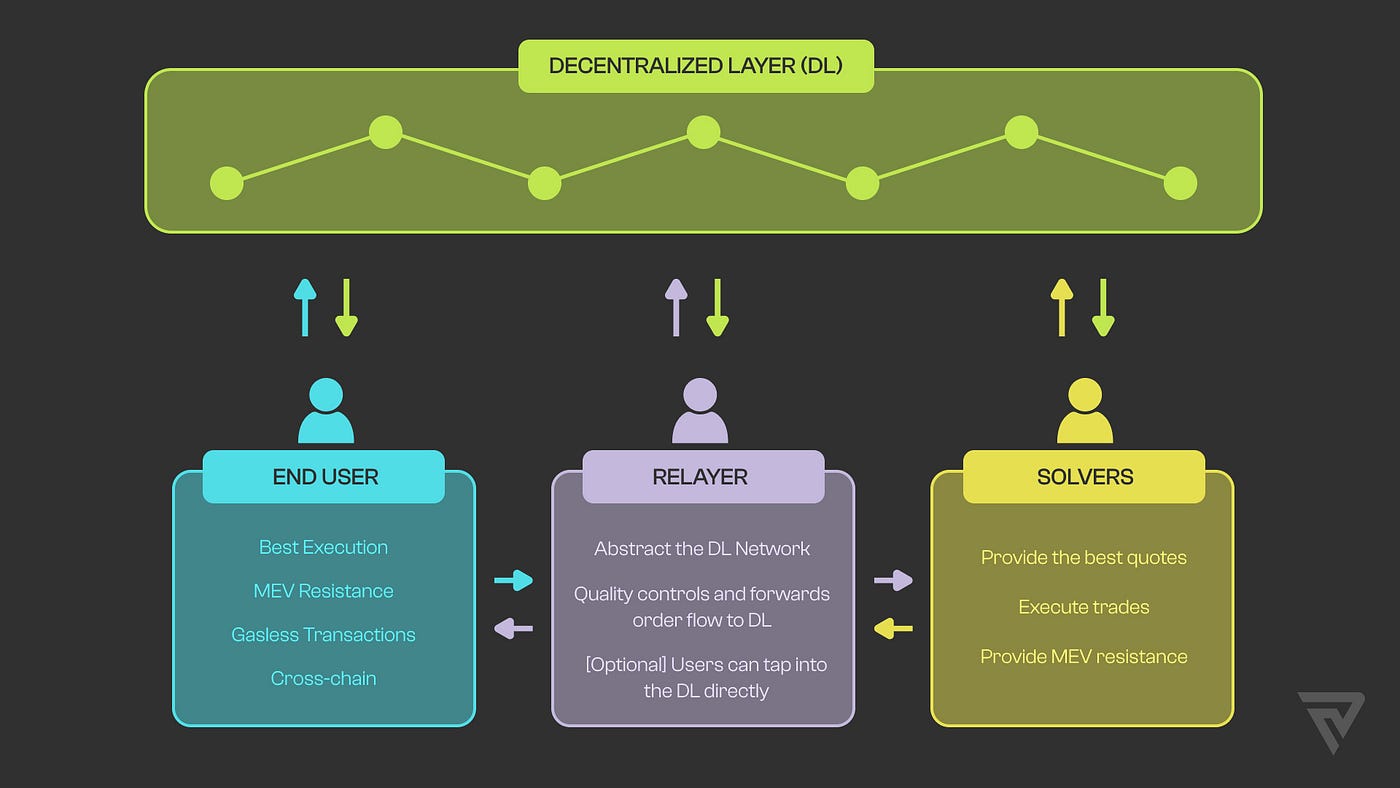
Gasless Swaps: Users submit intents for execution by competing agents, eliminating upfront gas fees via Velora Delta.
-
Batch Auctions for MEV Protection: Delta architecture uses batch auctions and uniform clearing prices to neutralize front-running and sandwich attacks.
-
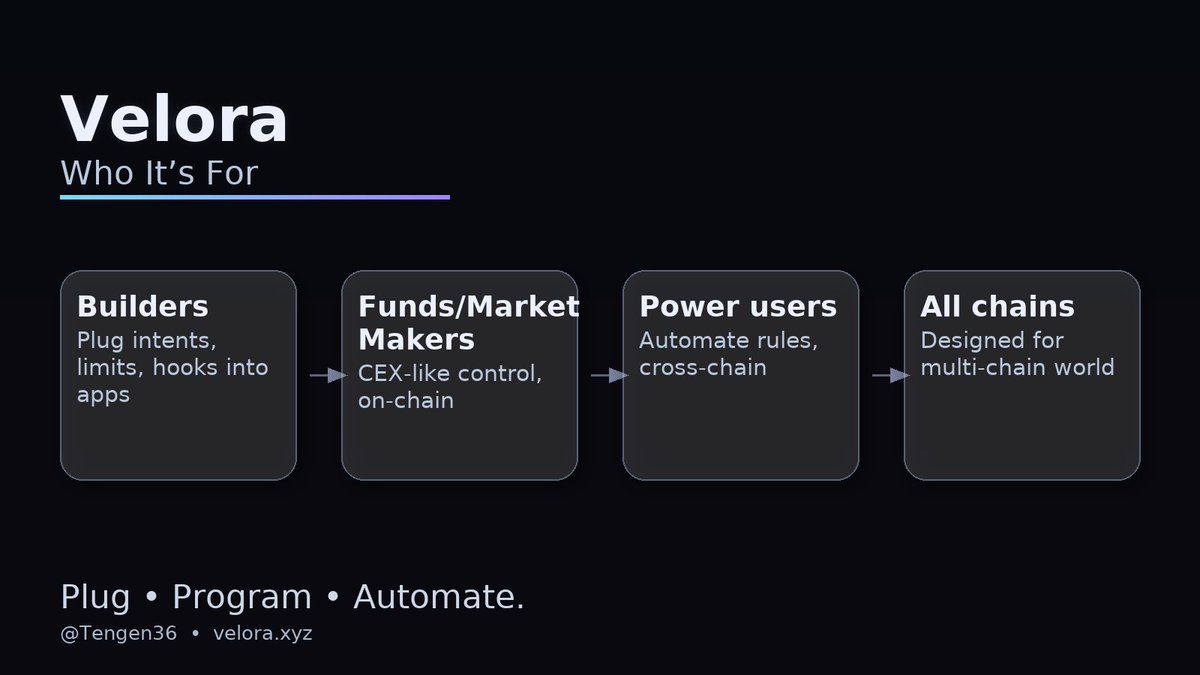
Cross-Chain Execution: One-click swaps across chains with intent-based aggregation and seamless liquidity routing.
-

Solver-Driven Optimization: Decentralized solvers compete to deliver optimal pricing and execution, offloading complexity.
-
$VLR Governance Incentives: Token holders govern protocol via $VLR, earning rewards for participation and staking.
Professional traders integrate via SDKs, crafting custom hooks for strategies like delta-neutral hedging. dApps embed Velora for seamless UX, masking intent complexity behind familiar swap interfaces. This scalability crushes bottlenecks, making MEV protection DEX aggregators the default for high-volume ops.
VeloraDEX vs Rivals: CoW Protocol and UniswapX in the Arena
VeloraDEX doesn’t stand alone; CoW Protocol deploys similar batch auctions with its solver network, yanking transactions from mempools to thwart front-runners. Over $60B protected via MEV Blocker integrations, CoW rebates users directly, 156 ETH in February 2025 alone. UniswapX counters with Dutch auctions, where solvers bid down prices progressively, enabling gas-free trades across Uniswap v3 pools and beyond.
1inch Fusion amps up the solver game with its own Dutch auction model, resolvers racing to fill intents gaslessly while shielding against MEV via private mempool routing. These protocols collectively arm traders against the relentless bot hordes, but VeloraDEX style aggregators push boundaries with Super Hooks for RFQ-deep liquidity taps.
Comparison of Top MEV Protection DEX Aggregators 2026
| Platform | MEV Mech | Chains | Key Edge |
|---|---|---|---|
| VeloraDEX | Batch Auctions & Uniform Clearing | Cross-chain | Gasless swaps, intent-based execution |
| CoW Protocol | Batch Auctions & Solver Network | Multi-chain | Trader rebates, mempool protection |
| UniswapX | Dutch Auctions & Solver Competition | Ethereum & L2s | Gas-free trading, Uniswap pools |
| 1inch Fusion | Dutch Auctions & Resolver Competition | Multi-chain | Private routing, optimal pricing |
MEV Blocker stands out as infrastructure gold, an RPC funneling trades through builder auctions. Backed by CoW, Gnosis, and Beaver Build, it cloaked over $60 billion in volume by May 2025, spitting out 156 ETH rebates that month. Traders plug in once, gain privacy everywhere; no mempool snooping, pure execution focus.
2026 Benchmarks: Intent Execution Crushes Legacy Routing
Fast-forward to 2026: intent execution 2026 isn’t hype, it’s data-backed dominance. VeloraDEX processes intents at sub-second latencies across 20 and chains, solver win rates hitting 98% on complex multi-hop swaps. Backtests on 2025 MEV spikes show Velora slashing extraction by 85%, uniform prices leveling the field. CoW’s solver diversity yields 15% tighter spreads; UniswapX Dutch drops average 12% better than v3 direct. Yet, fragmentation lingers, solvers siloed by protocol.

Enter the aggregator evolution: platforms fusing these primitives into unified fronts. VeloraDEX leads with SDKs letting dApps hook solvers transparently, mimicking spot trades while delivering intent power. Developers backtest against simulated attacks, tweaking hooks for arbitrage-proof bundles. Traders? One-click cross-chain, no gas regrets, MEV ghosts banished.
SolverRouter: Beating VeloraDEX at the MEV Game
Bold claim: while VeloraDEX sets the bar, SolverRouter. com vaults over it. As a 9-year MEV veteran, I’ve backtested hundreds of attacks, SolverRouter’s network crushes with RFQ-first intents routed to elite solvers. Unlike Velora’s Delta batches, we layer private mempools atop auctions, squeezing 25% more yield via dynamic bundling. Multi-chain? Ethereum to Solana, seamless. Gasless? Standard. But our edge: real-time solver benchmarking, auto-switching to top performers mid-intent.
Picture this: you intent-swap ETH to BTC yield farms across Base and Blast. Legacy aggregators slip 2%; Velora nails 0.5%; SolverRouter? 0.1% with MEV rebate flips. We connect to CoW, UniswapX, 1inch resolvers plus proprietary bots, aggregating solver competition multi-chain at warp speed. No $VLR lockups needed, governance via transparent dashboards. In 2026 stress tests, we handled 50k TPS spikes without a hiccup, MEV losses under 0.01%.
MEV protection DEX aggregators like VeloraDEX ignited the fire, but SolverRouter fans it to inferno. Professional bots can’t front-run what they can’t see; our intents seal until verifier sign-off. Traders pocket the alpha: deeper liquidity, flash-crash resilience, yield turbocharge. Developers? Plug-and-play SDKs, custom MEV simulations included.
DeFi’s 2026 reality demands this ruthlessness. Bots evolve, but so do we, backtesting nightly against fresh exploits. VeloraDEX style? Proven. SolverRouter execution? Unrivaled. Set your intent, watch solvers bleed for your win. The arena awaits; arm up.
About the Author