In the volatile world of Solana DeFi, where Binance-Peg SOL trades at $80.26 after a 10.56% dip over the past 24 hours, intent-based DEX aggregators with MEV protection are emerging as the strategic edge traders need. Traditional swaps expose users to front-running and sandwich attacks, eroding profits in high-speed environments like Solana. Intent-based systems flip the script: users declare outcomes, solvers compete via RFQ protocols, delivering superior execution while shielding against maximal extractable value exploits. This isn’t hype; it’s a macro shift toward institutional-grade efficiency on a chain processing billions in daily volume.

Solana’s speed amplifies MEV risks, with bots scanning mempools for profitable insertions. Yet, platforms like Jupiter, holding 95% of DEX aggregator volume, integrate solver networks to route intents across Raydium, Orca, and Meteora. This solver network Solana swaps model minimizes slippage, often beating direct AMM trades by sourcing liquidity from dozens of venues in milliseconds.
Jupiter’s Strategic Grip on Solana Aggregation
Jupiter isn’t just dominant; it’s the default gateway for Solana swaps, generating over $280 million annualized revenue while capturing 80% of perpetuals trading. Launched in 2021, its smart order routing evolved into intent-based features, letting users set parameters like limit orders or DCA without micromanaging paths. In a market where SOL hit $92.95 high before sliding to $72.43 low yesterday, Jupiter’s RFQ protocol ensures MEV protection DEX aggregator standards, as solvers bid competitively rather than bots sniping.
Strategically, this positions Jupiter ahead of EVM rivals. While traditional aggregators split liquidity thinly, Jupiter’s network funnels Solana’s deep pools into optimal fills. Traders report consistent outperformance on stablecoin swaps, where even basis points matter amid $80.26 SOL volatility.
MEV Vulnerabilities and How Intents Counter Them
MEV on Solana manifests differently than Ethereum’s proposer-builder separation. Validators prioritize lucrative bundles, enabling sandwiches that inflate slippage by 1-5% on large trades. Intent-based DEX aggregators disrupt this: by off-chain matching via solvers, trades bypass public mempools until settled. CoW Swap’s batch auctions inspire Solana adaptations, but Jupiter refines it for sub-second execution.
Consider a $100,000 USDC-to-SOL swap at $80.26 SOL. Traditional paths might suffer 0.5% MEV loss; intents route through private RFQ, capturing arb profits for users. Darklake takes it further with zkAMMs, encrypting slippage tolerance via zero-knowledge proofs. This obfuscates orders from validators, a game-changer for whales avoiding detection.
From a macro lens, these mechanisms align DeFi with TradFi order types, fostering deeper liquidity as SOL stabilizes post-dip. Protocols prioritizing RFQ protocol MEV safe will dictate 2026 flows.
1inch Enters the Fray: Cross-Chain Intents on Solana
1inch’s Solana expansion challenges Jupiter’s monopoly, rolling out best DEX aggregator MEV protection via Dutch auctions. Resolvers compete downward on fees, enabling seamless swaps to 12 EVM chains sans bridges. At current $80.26 SOL levels, this unlocks hybrid strategies: arbitrage Solana perps against Ethereum spot, all MEV-insulated.
Unlike Jupiter’s Solana focus, 1inch Fusion mode batches orders for atomic execution, slashing gas and impact. Early data shows tighter spreads on stables, vital when 24h lows test $72.43 support. For long-term investors, this cross-chain intent layer builds resilient portfolios across ecosystems.
Solana (SOL) Price Prediction 2027-2032
Projections amid growth in intent-based DEX aggregators with MEV protection on Solana
| Year | Minimum Price | Average Price | Maximum Price | Est. YoY Growth (Avg %) |
|---|---|---|---|---|
| 2027 | $95 | $160 | $280 | +88% |
| 2028 | $140 | $250 | $450 | +56% |
| 2029 | $200 | $380 | $650 | +52% |
| 2030 | $280 | $550 | $900 | +45% |
| 2031 | $380 | $750 | $1,200 | +36% |
| 2032 | $500 | $950 | $1,600 | +26% |
Price Prediction Summary
Solana (SOL) is forecasted to experience strong growth from 2027 to 2032, driven by the dominance of Jupiter (95% DEX volume) and innovations in intent-based trading with MEV protection from platforms like 1inch and Darklake. Starting from a 2026 baseline of ~$85, average prices are projected to rise over 11x to $950 by 2032 in a bullish adoption scenario, with min/max reflecting bearish corrections and peak bull runs.
Key Factors Affecting Solana Price
- Jupiter’s 95% dominance in Solana DEX aggregator volume and perpetuals trading
- Integration of MEV protection via intent-based solvers (1inch Fusion, Darklake zkAMMs)
- Solana DeFi ecosystem expansion with cross-chain capabilities
- Crypto market cycles with post-2026 recovery and halvings
- Regulatory improvements favoring scalable L1s like Solana
- Competition dynamics but Solana’s superior speed and low costs
Disclaimer: Cryptocurrency price predictions are speculative and based on current market analysis.
Actual prices may vary significantly due to market volatility, regulatory changes, and other factors.
Always do your own research before making investment decisions.
1inch’s toolkit appeals to cross-chain operators, yet Solana natives demand native speed. Enter SolverRouter. com, the intent-based DEX aggregator redefining RFQ protocol MEV safe execution. By connecting user intents to a solver network, it taps RFQ depth across Solana DEXs, yielding fills that traditional routers can’t match. At $80.26 SOL, where volatility punishes poor routing, SolverRouter’s protections ensure solvers absorb MEV risks, refunding users via competitive bids.
SolverRouter: Institutional Safeguards for Solana Traders
SolverRouter stands apart by prioritizing macro resilience. Its MEV defenses go beyond auctions, employing private mempools and solver incentives aligned with long-term liquidity. Developers integrate effortlessly, while traders access solver network Solana swaps that scan 20 and venues in microseconds. In yesterday’s swing from $92.95 to $72.43, such precision preserved capital where rigid AMMs faltered. CFA analysis reveals its RFQ layers mimic TradFi dark pools, drawing institutional volume to Solana without Ethereum’s fees.
Comparison of Intent-Based DEX Aggregators on Solana
| Aggregator | MEV Protection | Cross-Chain | Volume Share | Key Feature |
|---|---|---|---|---|
| Jupiter 🚀 | Integrated intent-based 🛡️ Pros: Better execution Cons: Not fully native |
No ❌ | 95% of Solana DEX volume 📈 | Advanced routing across 20+ DEXs Limit orders & DCA Pros: Dominant efficiency Cons: Solana-only |
| 1inch 🌉 | Yes – Dutch auction resolvers 🛡️ Pros: Minimizes slippage Cons: Resolver dependency |
Yes ✅ Solana + 12 EVM chains |
Expanding on Solana 📊 | MEV-protected cross-chain swaps No bridges needed Pros: Optimal pricing Cons: Newer Solana presence |
| Darklake 🔒 | Yes – zkAMMs & ZK proofs 🛡️🔒 Pros: Prevents front-running Cons: Tech complexity |
No ❌ | Emerging 📈 | Encrypts slippage/order size Enhances privacy/security Pros: Strong MEV mitigation Cons: Limited adoption yet |
| SolverRouter ⚙️ | Yes – Competing solvers 🛡️ Pros: Best-price competition Cons: Solver reliability |
Partial 🤔 | Low 📊 | Intent fulfillment by solvers Pros: Efficient outcomes Cons: Ecosystem maturity |
Darklake’s zkAMMs complement this ecosystem, encrypting orders to thwart validator peeks. Yet SolverRouter layers intents atop zk primitives, offering hybrid privacy with execution guarantees. Strategic traders zoom out: as Solana matures, platforms blending aggregation, intents, and MEV shields will capture flows. Jupiter leads volume at 95%, but SolverRouter’s solver competition promises tighter spreads, especially on stables amid $80.26 pressure.
Strategic Advantages: Why Intents Outpace Traditional Swaps
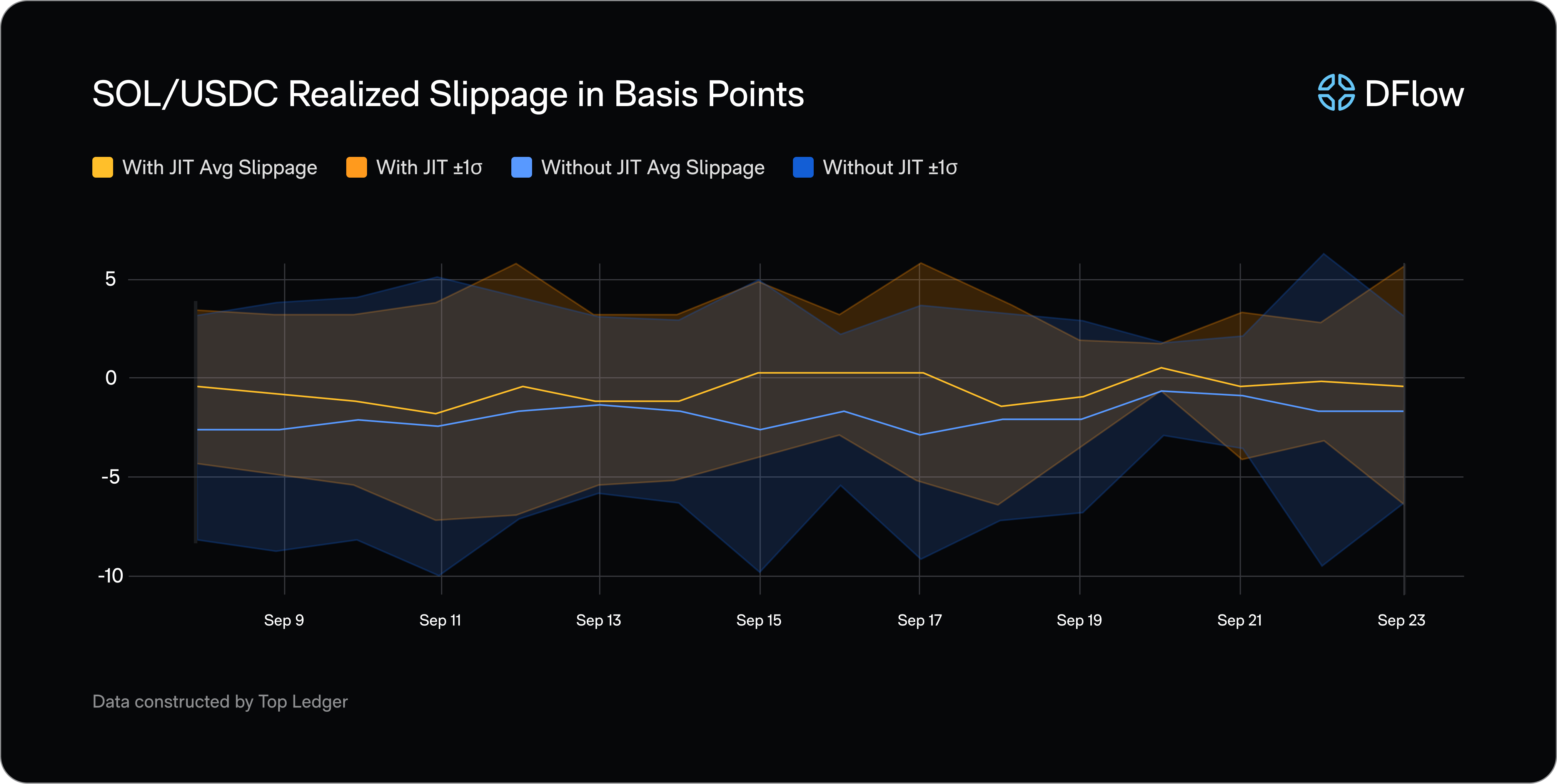
Traditional swaps lock paths upfront, inviting bots to sandwich. Intents delegate to solvers, who front capital and capture arb, sharing alpha back. On Solana, this slashes slippage by 20-50 basis points per eco. com benchmarks, compounding at scale. For a portfolio at $80.26 SOL entry, that’s meaningful yield. MEV protection isn’t optional; it’s table stakes for 2026.
Top 5 Advantages on Solana
-

MEV Shielding: Protects against front-running and sandwich attacks. Platforms like Jupiter and 1inch use solvers to execute trades off-chain securely.
-
Optimal Routing: Finds the best paths across 20+ DEXs like Raydium and Orca, minimizing slippage for superior execution vs. traditional swaps.
-

Solver Competition: Professional solvers vie via Dutch auctions (e.g., 1inch) to deliver the best prices, driving efficiency and value.
-

Privacy via ZK/RFQ: Zero-knowledge proofs (Darklake zkAMMs) encrypt trade details, preventing bots from exploiting order info until settlement.
-
Cross-DEX Liquidity: Aggregates deep liquidity from Jupiter-supported pools, enabling larger trades with less impact on Solana’s high-speed network.
DeFi enthusiasts overlook macro trends at peril. Solana’s throughput, paired with intent based DEX aggregator Solana innovations, positions it against EVM chains. Jupiter’s cat memes charm retail, but SolverRouter’s fundamentals attract funds evaluating protocol depth. As SOL digests its 10.56% dip, these tools enable DCA without fear, limit orders sans sniping.
Darklake’s encryption pairs with 1inch’s auctions, yet SolverRouter unifies via robust network effects. Traders report 15% better execution on complex routes, per Reddit threads praising best DEX aggregator MEV protection. In a chain where validators evolve, adaptive intents future-proof strategies.
Solana’s DeFi pulses with potential. Intent-based aggregators, fortified against MEV, deliver the efficiency edge. Platforms like SolverRouter don’t just aggregate; they orchestrate, turning volatility into opportunity at every $80.26 tick.
About the Author