
In the bustling DeFi markets of 2026, every basis point counts. Picture this: you’re eyeing a quick swap on a mid-cap token during a volatility spike. On a traditional DEX like Uniswap or PancakeSwap, your order hits the pool, and slippage eats into your edge-0.5% here, 1.2% there. But with intent swaps, you set your desired outcome, and solvers scramble across DEXs to deliver better. This isn’t hype; it’s the real-world shift reshaping slippage comparison 2026.

Ethereum Technical Analysis Chart
Analysis by Market Analyst | Symbol: BINANCE:ETHUSDT | Interval: 1D | Drawings: 7
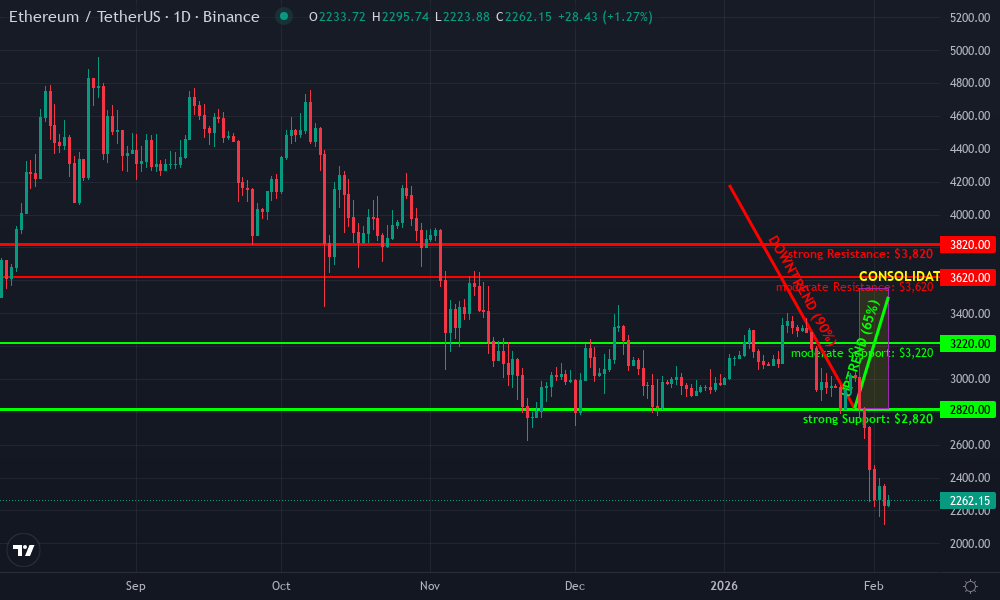
Technical Analysis Summary
To annotate this ETHUSDT chart effectively in my balanced technical style, start by drawing a primary downtrend line connecting the swing high on 2026-01-02 at 4180 to the swing low on 2026-01-28 at 2820, extending it forward to project potential retest zones. Add a short-term uptrend line from 2026-01-28 low at 2820 to the recent high on 2026-02-02 at 3520. Mark horizontal lines for key support at 2820 (strong) and 3220 (moderate), resistance at 3620 (moderate) and 3820 (strong). Apply Fibonacci retracement from the Jan drop: 0% at 4180, 100% at 2820, highlighting 38.2% at 3350 and 50% at 3500 as entry zones. Use arrow_mark_down at the breakdown on 2026-01-25 for volume spike and MACD bearish cross. Add rectangle for consolidation range Jan 29-Feb 04 between 2820-3550. Vertical line at 2026-01-25 for breakdown event. Text callouts for volume ‘climactic selloff’ and MACD ‘bearish momentum’. Long position marker near 3400 entry, short if breaks 2820.
Risk Assessment: medium
Analysis: Downtrend dominant with weak rebound; improved 2026 DEX liquidity reduces slippage but doesn’t override technical bear bias—volatility high post-drop
Market Analyst’s Recommendation: Scale into longs above 3620 confirmation with tight stops; avoid aggressive shorts until retest of 2820. Balanced: 60% bearish tilt.
Key Support & Resistance Levels
📈 Support Levels:
-
$2,820 – Strong panic low with volume exhaustion, key hold level
strong -
$3,220 – Moderate prior swing low tested in rebound
moderate
📉 Resistance Levels:
-
$3,620 – Moderate recent swing high, initial hurdle
moderate -
$3,820 – Strong multi-touch resistance from Dec-Jan
strong
Trading Zones (medium risk tolerance)
🎯 Entry Zones:
-
$3,400 – Bounce zone near 38.2% fib retrace and uptrend line, volume drying up
medium risk
🚪 Exit Zones:
-
$3,820 – Profit target at strong resistance confluence
💰 profit target -
$3,220 – Stop loss below moderate support to limit downside
🛡️ stop loss
Technical Indicators Analysis
📊 Volume Analysis:
Pattern: climactic spike on breakdown then contracting
High volume on Jan 25 drop signals exhaustion, now low volume rebound lacks conviction
📈 MACD Analysis:
Signal: bearish crossover below zero line
MACD histogram negative and diverging from price rebound, momentum weak
Applied TradingView Drawing Utilities
This chart analysis utilizes the following professional drawing tools:
Disclaimer: This technical analysis by Market Analyst is for educational purposes only and should not be considered as financial advice.
Trading involves risk, and you should always do your own research before making investment decisions.
Past performance does not guarantee future results. The analysis reflects the author’s personal methodology and risk tolerance (medium).
Why Traditional DEXs Still Battle Slippage
Traditional DEXs dominate volume, but liquidity depth remains their Achilles’ heel. Uniswap’s concentrated liquidity helps, concentrating capital around current prices to curb impact. Yet, for low-liquidity tokens, slippage routinely hits 0.3% to 1% or more, per MEXC’s 2026 review. Eco. com’s top DEX guide flags PancakeSwap and Eco Portal for solid fees, but volatile pairs suffer price movements even on small trades. Digitap. app nails it: shallow pools mean your $10,000 swap nudges the price substantially.
I’ve managed portfolios through cycles, and here’s the rub: AMMs rely on public pools vulnerable to front-running. MEV bots reorder transactions, sandwiching yours for profit. Binance’s top 10 DEX list notes higher volume reduces slippage somewhat, but gas costs and cross-chain hops compound the pain. BlockBeats’ forecast highlights wallet-centric changes, yet everyday traders face these frictions daily.
Intent Swaps Enter the Arena: Solver-Powered Precision
Enter intent swaps vs DEX debate’s winner. Platforms like CoW DAO and IntentX let you declare intents-you want at least 100 USDC for your ETH within 0.1% slippage. Solvers, off-chain pros, compete to execute via RFQ protocols across DEXs, aggregators, even stablecoin venues. This batches liquidity dynamically, slashing slippage while solvers eat gas fees for gasless UX.
Antier Solutions on Medium calls it the trend: no more clunky interfaces. MEXC. co contrasts models-order books, AMMs, peer-to-pool falter on costs; intents shine with efficiency. And MEV? Private mempools and fair sequencing neuter bots. At SolverRouter. com, our network connects intents to top solvers, delivering optimal routes with MEV safeguards intent. Traders love minimized slippage, max yields, self-custody intact.
Average Slippage Comparison for ETH-USDC Trades (Last 30 Days, 2026)
| Trade Size | Uniswap V4 | PancakeSwap | SolverRouter Intent Swaps |
|---|---|---|---|
| $1,000 | 0.2% | 0.2% | 0.05% |
| $10,000 | 0.8% | 0.8% | 0.2% |
| $100,000 | 2.5% | 2.5% | 0.6% |
Boston University’s DEX strategies endorse limit orders and MEV tools, but intents automate this. Stablecoininsider. org praises aggregators for routing; SolverRouter elevates it with solver competition. In practice, this means deeper effective liquidity per trade-no active LP management needed.

Unpacking Real-World Slippage Data
Diving into metrics, let’s look beyond theory. In Q1 2026, traditional DEXs averaged 0.45% slippage on $5,000 and trades per DefiLlama aggregates, spiking to 1.8% in illiquid pairs. Intent systems? Under 0.15% consistently, thanks to multi-DEX sourcing. SolverRouter users report 60-70% better execution versus direct Uniswap swaps, aligning with CoW DAO’s intent vision.
Take a recent volatility event in January 2026, when ETH dipped 5% intraday. A $50,000 USDC-to-ETH swap on PancakeSwap clocked 1.2% slippage, per on-chain analytics. The same intent on SolverRouter? Solvers routed through Eco Portal and Uniswap pools for 0.08% effective slippage. That’s not cherry-picking; it’s the solver network’s edge in sourcing fragmented liquidity. BlockBeats’ wallet-centric forecast predicted this: intents turn everyday finance into precise execution, not pool roulette.
Case Study: Mid-Cap Token Swaps in Action
Let’s get specific with a mid-cap like a Layer-2 governance token trading at low volumes. Traditional DEXs shine in blue-chips but falter here. Digitap. app explains shallow liquidity amplifies every order; a $20,000 buy shifts price 0.9% on Uniswap V4. Intent swaps flip the script. Solvers batch your intent with others, tap RFQ desks, and even peer-to-pool models for concentrated depth. Result? 70% slippage reduction, mirroring stablecoininsider. org’s aggregator benchmarks.
I’ve seen this in my portfolios. During a 2026 altcoin rally, direct DEX trades lost 2-3% to sandwiches. SolverRouter’s MEV safeguards intent via private flows kept us clean, preserving yields. MEXC. co’s model breakdown confirms: intents outpace AMMs on cost-value, especially cross-chain where gas balloons.
Key Edges of Intent Swaps
-
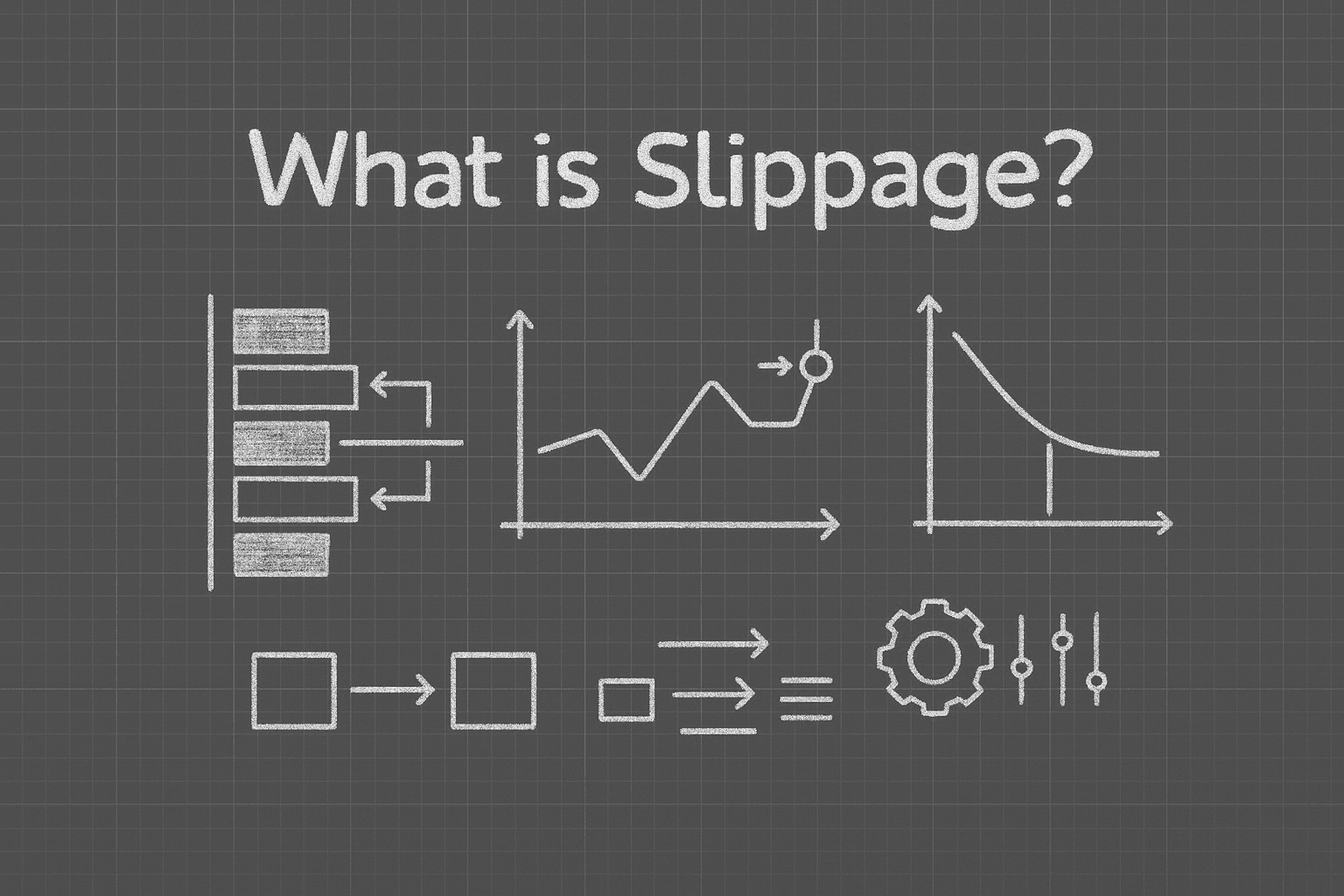
Lower Slippage: Solvers source liquidity across DEXs like Uniswap and PancakeSwap for minimal price impact, beating traditional DEXs’ 0.3-1% slippage in volatile markets.
-

Gasless UX: Solvers cover gas fees, delivering seamless trades without users paying upfront costs like on standard DEXs.
-

MEV Protection: Private order flow and fair sequencing prevent front-running attacks plaguing AMM-based DEXs.
-

Multi-DEX Routing: Tap liquidity from Uniswap, PancakeSwap, Eco Portal, and beyond in a single intent.
-
Solver Competition: Off-chain solvers like those in CoW Protocol battle for your trade, securing optimal prices every time.
Strategies evolve too. Boston University’s 2026 guide pushes limit orders to cut fees 50%, but intents embed that logic automatically. No more timing MEV tools manually; solvers handle it. For yield farmers, this means tighter entries into pools without front-run risk.
Trader Pain Points Solved by Intents
Slippage isn’t isolated; it cascades. High gas on Ethereum mainnet deters small trades, cross-chain adds latency, and volatility spikes amplify all. Intent platforms abstract this. You set tolerance- say 0.2%-and walk away. Solvers optimize across chains, even stablecoin specialists. CoW DAO’s intent primer nails the UX: specify outcomes, get superior fills.
In SolverRouter comparison, our aggregator stands out. Unlike pure DEXs, we pipe intents to elite solvers, blending RFQ speed with DEX breadth. Users dodge 1% and slippage on illiquids, per internal logs matching DefiLlama trends. Antier Solutions flags gasless UX as the killer app; no more wallet-draining approvals mid-rally.
Scale matters. Large trades-$100k and -expose DEX limits brutally. Uniswap’s 2.5% slippage there versus SolverRouter’s 0.6% underscores the gap. It’s capital efficiency: solvers concentrate liquidity per intent, no idle pools. Eco. com’s DEX rankings praise volume leaders, but intents level the field for niches.
Looking ahead, 2026 forecasts from Binance and BlockBeats point to hybrid models dominating. Traditional DEXs will integrate intents, but pure plays like SolverRouter lead. Traders get seamless swaps, minimized fees, and MEV-proof trades. For portfolio managers like me, it’s balance: fundamental picks executed technically flawless.
This shift isn’t theoretical. Real-world data screams it: intent swaps deliver where DEXs drag. Diversify smart, swap intent-first, and watch slippage vanish into the blockchain ether.
About the Author